
predictivehire
PredictiveHire Alternatives for Modern Recruiting
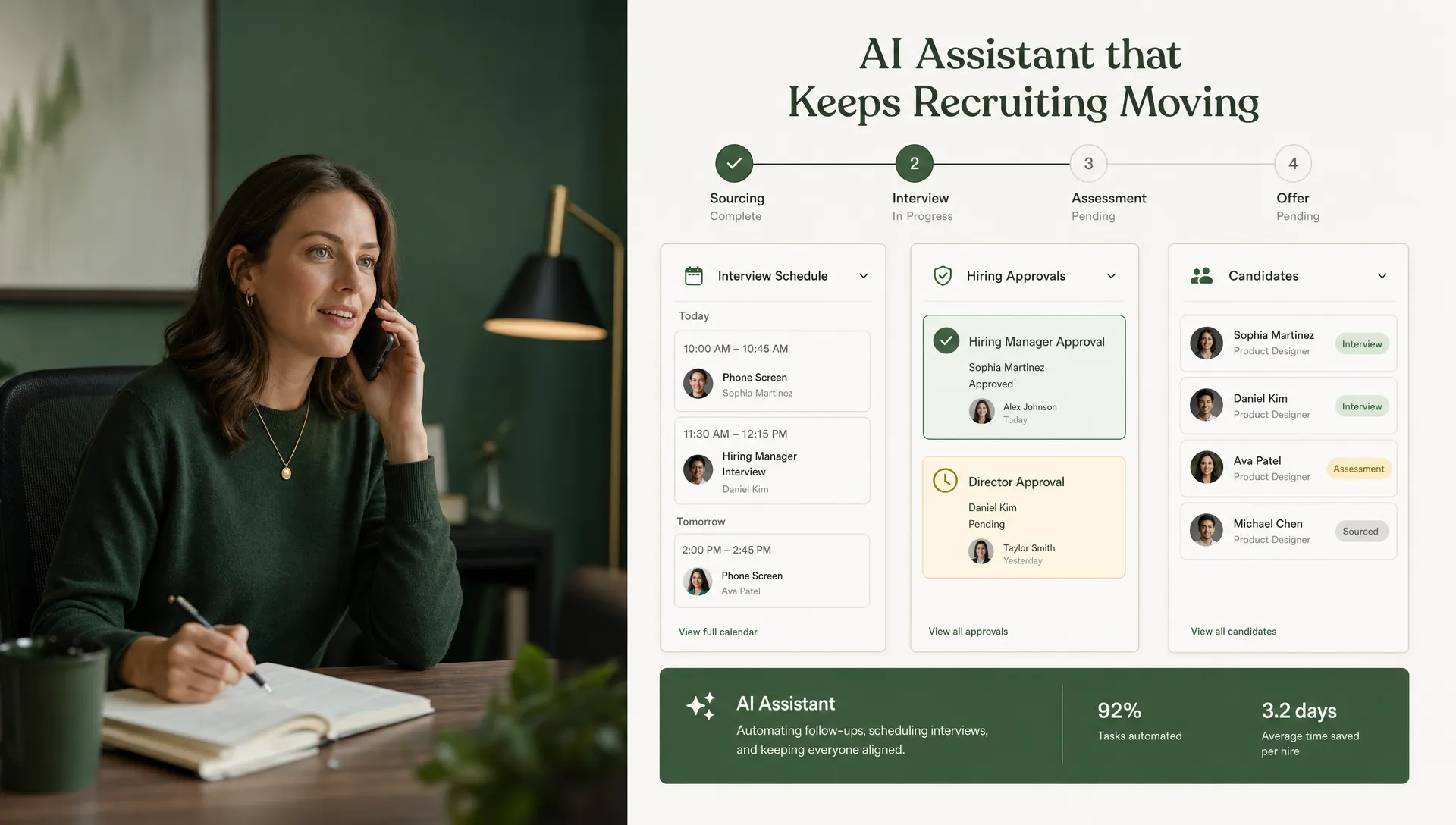
If you are searching for PredictiveHire alternatives, you are probably not just comparing another AI assessment tool. You are likely asking a bigger question: which recruiting platform can help your team screen candidates, communicate faster, schedule interviews, and keep the pipeline moving without losing human judgment?
That distinction matters. Early AI hiring tools often focused on one part of the funnel, such as screening, assessments, or interview analysis. Modern recruiting teams need more connected support. Agencies manage multiple clients and roles at once. In-house HR teams need consistent candidate experience across functions and locations. Recruiters need help with repetitive work, but they also need control over what gets sent, who advances, and how decisions are documented.
This guide breaks down the main PredictiveHire alternatives to consider in 2026, when each type of tool makes sense, and how to build a shortlist based on your actual hiring workflow.
What modern teams usually want from a PredictiveHire alternative
PredictiveHire and similar solutions helped popularize the idea that AI could support candidate evaluation. But recruiting technology has moved from isolated AI checkpoints toward end-to-end workflow assistance.
For many teams, the goal is no longer simply “rank candidates faster.” It is to reduce the manual drag across the whole process: clarifying job requirements, identifying evidence in applications, drafting outreach, answering candidate questions, booking interviews, updating the ATS, and giving recruiters cleaner information to act on.
The same shift is happening outside recruitment. Marketing teams, for example, increasingly use AI systems to generate campaign ideas, create assets, and execute repeatable workflows, as seen with platforms for AI-powered marketing workflows for ecommerce brands. Recruiting is following a similar pattern: AI is becoming less of a standalone feature and more of an operational layer that helps teams execute consistently.
A strong PredictiveHire alternative should therefore be evaluated on workflow fit, not just AI novelty.
Key evaluation criteria before you compare tools
Before choosing a platform, define what you need the alternative to do. A tool that works well for high-volume hourly hiring may not be the right fit for an executive search firm, a staffing agency, or a corporate talent team hiring across specialist roles.
Use these criteria to narrow your search:
| Evaluation area | What to look for | Why it matters |
|---|---|---|
| Workflow coverage | Intake, screening, outreach, scheduling, pipeline updates, or interview intelligence | Prevents teams from buying a tool that only solves one bottleneck |
| Evidence-based scoring | Clear reasoning behind candidate recommendations | Helps recruiters review AI output instead of blindly trusting a score |
| Human approval | Recruiters approve messages and decisions before action is taken | Protects candidate experience, brand tone, and compliance posture |
| Integrations | ATS, CRM, calendar, email, and communication tool compatibility | Keeps data from becoming trapped in another disconnected system |
| Candidate communication | Chat, email, SMS, or voice capabilities depending on role type | Speeds response times and reduces drop-off |
| Multi-language support | Ability to support candidates in different languages | Useful for international hiring and distributed teams |
| Data handling | Privacy-conscious design and clear governance | Essential when working with candidate data |
If you want a deeper buying checklist, CandiDesk has a practical guide on what to look for in AI recruitment software, including intake quality, recruiter control, and integration readiness.
PredictiveHire alternatives to consider in 2026
There is no single “best” alternative for every team. The right option depends on whether you need assessments, sourcing, interview intelligence, candidate engagement, or an AI recruiting assistant that spans multiple steps.
| Alternative | Best fit | Where it tends to help most |
|---|---|---|
| CandiDesk | Agencies and HR teams that want AI-assisted recruiting operations | Intake, screening, outreach drafting, calls, scheduling, and pipeline updates |
| HireVue | Enterprise teams focused on structured digital interviewing | Video interviewing, assessments, and standardized candidate evaluation |
| Paradox | High-volume and frontline hiring teams | Conversational candidate engagement and scheduling |
| Eightfold AI | Large enterprises focused on talent intelligence | Skills matching, workforce insights, and internal mobility |
| SeekOut | Teams that need stronger outbound sourcing | Talent search, sourcing workflows, and candidate discovery |
| Gem | Recruiting teams focused on CRM and nurture | Talent pipelines, outreach campaigns, and engagement tracking |
| Metaview | Teams that need better interview documentation | Interview notes, summaries, and hiring conversation intelligence |
| ATS-native AI features | Teams that want incremental improvements inside existing systems | Basic automation, job descriptions, summaries, or workflow shortcuts |
CandiDesk
CandiDesk is a strong option for agencies and HR teams that want AI support across the recruiting workflow rather than only at the assessment stage. It is designed to help with smart intake from client briefs, candidate screening with evidence, AI chat and voice calls, human-approved outreach drafting, interview scheduling automation, and pipeline or calendar sync.
The key point is recruiter control. CandiDesk can draft and automate parts of the process, but messages are approved by a human before they are sent. That makes it especially relevant for teams that want speed without giving up judgment or brand consistency.
CandiDesk also fits teams that work across existing systems because it is built around ATS, CRM, and communication tool integrations. For agencies juggling multiple client requirements, or HR teams that need consistent execution across roles, this type of assistant workflow can reduce repetitive work while keeping recruiters focused on the highest-value conversations.
HireVue
HireVue is often considered by enterprise teams that want structured digital interviewing and assessment capabilities. It may be a fit when the main challenge is standardizing evaluations at scale, especially across large candidate pools.
Teams considering HireVue should think carefully about candidate experience, job relevance, and how assessment outputs will be reviewed by humans. It can be useful when interviewing consistency is the central problem, but it may not cover all operational needs around intake, outreach, scheduling, and pipeline administration.
Paradox
Paradox is known for conversational recruiting automation, particularly in high-volume hiring environments. It is commonly associated with candidate communication, screening conversations, and scheduling for frontline roles.
If your biggest issue is candidate response speed, interview booking, or managing large volumes of applicants, a conversational assistant can be valuable. However, teams with complex agency workflows, multi-client intake, or evidence-based shortlist requirements should check how well the tool supports their broader process.
Eightfold AI
Eightfold AI is usually evaluated by larger organizations looking for talent intelligence. Its value often sits around skills-based matching, internal mobility, workforce planning, and connecting talent data across the enterprise.
It can be a strong fit when the problem is not just filling open jobs, but understanding the skills already present in the organization and identifying future talent opportunities. Smaller teams or agencies may find it more platform-heavy than they need if their immediate bottleneck is day-to-day recruiting execution.
SeekOut
SeekOut is a relevant alternative if sourcing is your biggest gap. Rather than focusing primarily on candidate assessment, it is typically used to help recruiters find and engage talent, especially for hard-to-fill roles.
This makes it useful for teams that need a stronger top-of-funnel engine. If your recruiters already have good screening and scheduling workflows but struggle to identify qualified candidates, a sourcing-focused platform may be the right addition.
Gem
Gem is often used as a recruiting CRM and candidate engagement platform. It is a good fit for teams that need to build talent pools, nurture passive candidates, and track outreach performance over time.
For recruiting teams with longer hiring cycles, competitive talent markets, or repeat hiring needs, CRM strength can matter as much as screening automation. Gem may be less relevant if your immediate pain is intake, interview scheduling, or candidate screening, but it can be valuable for pipeline development.
Metaview
Metaview focuses on interview intelligence, helping teams capture and summarize interview conversations. It is useful when recruiters and hiring managers lose time writing notes, aligning feedback, or reconstructing what happened during interviews.
If your process breaks down after candidates reach interviews, interview intelligence can improve consistency and reduce administrative work. It is less of a direct replacement for screening or recruiting workflow automation, but it can complement other tools well.
ATS-native AI features
Many applicant tracking systems now include AI features such as job description drafting, candidate summaries, workflow suggestions, or communication templates. These can be helpful if your team wants incremental automation without adding another platform.
The tradeoff is depth. Native AI features may be convenient, but they often solve narrow problems inside the ATS. If your team needs 24/7 candidate communication, voice calls, multi-language outreach, or more advanced workflow support, a dedicated AI recruiting platform may be a better fit.
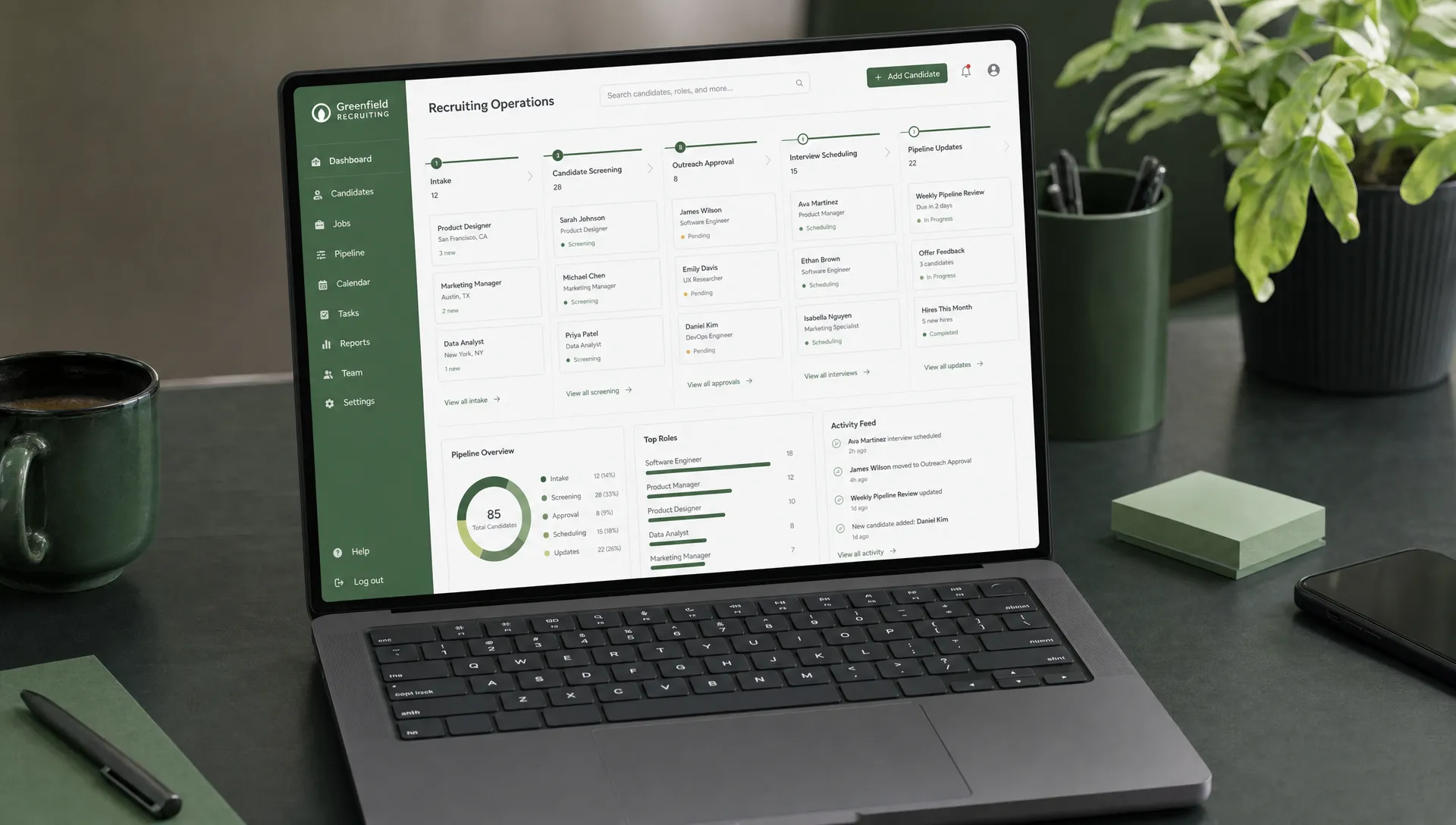
Which alternative fits your hiring model?
A useful way to compare PredictiveHire alternatives is to start with your hiring model, not the vendor category. Different teams experience different bottlenecks.
| Hiring model | Most important needs | Tools to evaluate first |
|---|---|---|
| Staffing and recruitment agencies | Fast intake, multi-client screening, outreach, scheduling, CRM or ATS updates | CandiDesk, Gem, SeekOut |
| In-house HR teams | Consistent screening, candidate communication, scheduling, compliance-aware workflows | CandiDesk, Paradox, HireVue |
| High-volume hourly hiring | Fast candidate response, conversational screening, interview booking | Paradox, HireVue, CandiDesk |
| Enterprise talent teams | Skills intelligence, internal mobility, workforce planning | Eightfold AI, HireVue, ATS-native AI |
| Technical or specialist hiring | Better sourcing and targeted outreach | SeekOut, Gem, CandiDesk |
| Teams with interview feedback gaps | Better notes, summaries, and structured interview records | Metaview, HireVue |
This is also where buying committees should be honest about whether they need a replacement or a complement. A sourcing tool may pair well with an AI recruiting assistant. An interview intelligence tool may improve hiring manager alignment but still leave recruiters doing manual scheduling. A talent intelligence platform may support strategic workforce planning while not solving daily outreach bottlenecks.
CandiDesk vs assessment-first alternatives
Many PredictiveHire alternatives are strongest in one defined area: assessments, sourcing, candidate engagement, or interview analytics. CandiDesk is different because it is built around the daily workflow of recruiters.
That distinction matters if your team’s pain is operational. For example, a recruiter may not only need to know whether a candidate looks qualified. They may also need to understand the client brief, compare evidence against role requirements, draft a personalized message, answer candidate questions, schedule the interview, update the pipeline, and keep the hiring manager informed.
CandiDesk supports that broader motion with features such as smart intake, candidate scoring with evidence, AI chat and voice calls, human-approved outreach, scheduling automation, multi-language outreach support, and ATS or CRM integrations.
For teams that want always-on candidate and client conversations, CandiDesk’s 24/7 Assistant is especially relevant. It can help with job overviews, interview scheduling and rescheduling, and drafting follow-ups while keeping recruiters in control of the process.
How to build a shortlist without getting distracted by AI hype
AI recruiting software can look impressive in a demo, but the real test is whether it improves the measurable parts of your process. Before committing to any PredictiveHire alternative, build your shortlist around specific workflow outcomes.
Start with one or two painful use cases. For example, you might focus on reducing time from application to first recruiter review, increasing candidate response speed, or cutting manual scheduling work. Avoid evaluating every possible feature at once, because broad pilots often make it harder to identify actual value.
Then ask vendors to show how the system handles real inputs. A polished generic demo is less useful than seeing how the tool interprets one of your job briefs, scores a real anonymized candidate profile, drafts outreach in your tone, or syncs a status change with your existing systems.
Recruiter adoption should also be part of the evaluation. The best AI tool is not the one that removes recruiters from the process. It is the one that helps recruiters spend less time on repetitive administration and more time on judgment, relationships, and closing candidates. If your team needs a broader platform evaluation process, this guide on how to choose a talent acquisition platform can help structure the decision.
Questions to ask every vendor
Before choosing a PredictiveHire alternative, ask practical questions that reveal how the platform behaves in real recruiting conditions:
- How does the tool explain candidate recommendations?
- Can recruiters approve messages before they are sent?
- Which ATS, CRM, calendar, and communication tools does it integrate with?
- How does it handle candidate data and privacy requirements?
- Can it support multiple roles, clients, languages, or locations?
- What happens when a candidate asks a question the AI cannot answer confidently?
- How quickly can recruiters override, edit, or correct AI output?
The answers will help you separate useful recruiting infrastructure from tools that only look good in a controlled demo.
Frequently Asked Questions
What is the best PredictiveHire alternative? The best alternative depends on your main hiring bottleneck. CandiDesk is a strong fit for agencies and HR teams that need recruiting workflow automation, while tools like HireVue, Paradox, Eightfold AI, SeekOut, Gem, and Metaview may fit more specialized needs.
Are PredictiveHire alternatives only for large companies? No. Some platforms are enterprise-oriented, but many recruiting teams evaluate AI tools to solve practical problems such as screening, outreach, scheduling, and pipeline updates. The right fit depends more on workflow complexity than company size.
Should an AI recruiting platform replace recruiters? No. The strongest use case is recruiter assistance, not recruiter replacement. AI can reduce repetitive work, draft communications, organize information, and surface evidence, while humans remain responsible for judgment, relationship-building, and final decisions.
What should staffing agencies prioritize in an alternative? Staffing agencies should prioritize structured intake, fast candidate screening, human-approved outreach, scheduling automation, and ATS or CRM sync. Multi-client workflows often require more than a narrow assessment tool.
How can teams reduce risk when using AI in hiring? Teams should keep humans in control, document decision criteria, review AI recommendations for relevance, avoid using unexplained scores as the sole decision factor, and choose vendors with clear data handling practices.
Explore a modern recruiting workflow with CandiDesk
PredictiveHire alternatives vary widely. Some help with assessments, some with sourcing, some with interviews, and some with engagement. If your team needs a more connected way to manage intake, screening, outreach, scheduling, and pipeline updates, CandiDesk is built for that modern recruiting workflow.
It helps agencies and HR teams move faster while keeping recruiters in control, with AI assistance across the repetitive work that slows hiring down.

Nikon Mazur
Nikon is a recruiting technology specialist with over five years of hands on experience building HR and hiring software, and the co founder of CandiDesk.
LinkedIn Profile