
ai recruitment technologies
Top AI Recruitment Technologies Shaping 2026
In 2026, the question is no longer whether AI belongs in recruiting. The real question is which AI recruitment technologies improve hiring speed, quality, consistency, and candidate experience without creating new operational or compliance risk.
Recruiting teams have already seen what basic automation can do. The next wave is more ambitious. AI is moving from isolated point tools, such as resume parsers or chatbots, into connected recruiting workflows that support intake, screening, outreach, scheduling, interviews, pipeline updates, and reporting.
For agencies and HR teams, this shift matters because the biggest hiring bottlenecks are rarely caused by one task. Slow hiring usually comes from handoffs, unclear role requirements, inconsistent screening, delayed follow-up, and fragmented systems. The top AI recruitment technologies shaping 2026 are the ones that make those handoffs faster and more reliable while keeping recruiters in control.
Why 2026 is a turning point for AI in recruitment
Several forces are converging at once. Candidate expectations are higher, especially for speed, transparency, and personalized communication. Hiring managers want stronger shortlists with clearer reasoning. Agencies need to protect margins while handling more searches with the same team. HR teams need more consistency across roles, regions, and recruiters.
At the same time, AI scrutiny is increasing. Employers are expected to understand how automated tools influence hiring decisions, how candidate data is handled, and where human review fits into the process. The U.S. Equal Employment Opportunity Commission has published guidance on AI and employment selection, and similar conversations continue globally around fairness, privacy, and transparency.
That creates a clear standard for 2026: useful recruitment AI should not be a black box. It should make work faster, but it should also provide evidence, keep humans in the loop, and fit into the systems recruiters already use.
A quick map of the technologies reshaping recruiting
The most important AI recruitment technologies are not all doing the same job. Some improve decision support. Others improve communication, scheduling, data quality, or workflow orchestration.
| Technology | What it improves | Why it matters in 2026 |
|---|---|---|
| Smart intake copilots | Role definition and search alignment | Better intake reduces rework and weak shortlists |
| Evidence-based candidate scoring | Screening consistency | Recruiters can see why a candidate was recommended |
| AI resume and profile parsing | Structured candidate data | Cleaner data improves search, matching, and reporting |
| Conversational AI chat and voice | Candidate engagement and screening | Teams can respond outside working hours without losing context |
| Generative outreach | Personalized candidate messaging | Recruiters can scale outreach while preserving quality |
| Scheduling automation | Interview coordination | Less back-and-forth reduces candidate drop-off |
| Talent rediscovery | Existing database utilization | Past applicants become a stronger source of qualified talent |
| Interview intelligence | Notes, summaries, and structured feedback | Hiring teams make more consistent comparisons |
| Compliance and audit tools | Governance and documentation | AI adoption becomes easier to defend and manage |
| Workflow agents and integrations | End-to-end recruiting execution | AI supports the full pipeline, not just isolated tasks |
Smart intake copilots
Good hiring starts before a candidate is ever contacted. One of the most valuable AI recruitment technologies in 2026 is the smart intake copilot, which turns client briefs, hiring manager notes, and role descriptions into structured requirements.
Instead of starting with a vague job description, recruiters can use AI to clarify must-have skills, nice-to-have experience, knockout criteria, target industries, compensation constraints, interview steps, and candidate selling points. For agencies, this improves alignment with clients. For internal HR teams, it reduces the common gap between what a hiring manager says they want and what the market can realistically provide.
The best intake AI does not simply rewrite job descriptions. It creates a shared operating brief that screening, outreach, and interviews can all reference. That makes the entire hiring process more consistent.
Evidence-based candidate scoring
Candidate scoring is evolving quickly. Early AI screening tools often produced rankings without enough context, which made recruiters uneasy and created fairness concerns. In 2026, stronger systems are moving toward evidence-based scoring.
That means the AI should explain which parts of a resume, profile, screening answer, or conversation support the score. Instead of saying “strong match,” a better tool highlights relevant experience, missing requirements, potential concerns, and evidence tied to the role brief.
This is especially useful when recruiters manage high-volume roles or complex searches. It helps teams compare candidates consistently, but it should never remove recruiter judgment. Human review remains essential for context, transferable skills, career changes, and candidate potential.
If shortlist quality is your main bottleneck, it is worth understanding how an AI tool for resume screening improves shortlists before adopting a broader platform.
AI resume and profile parsing
Resume parsing is not new, but modern AI parsing is more capable than traditional keyword extraction. Today’s systems can interpret job history, infer skill relationships, normalize titles, identify gaps, and structure candidate information from resumes, LinkedIn-style profiles, application forms, and recruiter notes.
This matters because recruiting databases are often messy. Two candidates with similar experience may appear very different if one resume uses “account executive” and another uses “sales consultant.” AI parsing helps standardize the data so recruiters can search more accurately and compare candidates more fairly.
Parsing becomes even more powerful when connected to intake criteria. The AI is not just extracting information. It is organizing candidate data around what the role actually requires.
Conversational AI chat and voice screening
Conversational AI is one of the most visible changes in recruiting. Chat and voice agents can answer candidate questions, collect availability, ask initial screening questions, confirm interest, and keep candidates updated when recruiters are offline.
For agencies, this can be especially valuable because speed-to-contact affects placement outcomes. For HR teams, it helps maintain a consistent candidate experience across roles and locations. A candidate who applies on Friday evening should not have to wait until Monday afternoon for the first response.
The key is setting boundaries. Voice AI and chat should be transparent, useful, and clearly connected to a recruiter-owned process. Candidates should understand when they are interacting with AI, what information is being collected, and how it will be used.
Generative outreach and candidate engagement
Generative AI has changed recruiting outreach, but not always for the better. Low-quality AI messaging can feel generic, over-personalized, or careless. In 2026, the winning approach is not simply more messages. It is better messages with human approval.
AI can help recruiters draft role-specific outreach, tailor messages by candidate background, create follow-up sequences, and adapt tone for different markets or languages. It can also summarize why the opportunity may be relevant to a candidate, which saves recruiters time while improving message quality.
Sourcing signals are also expanding beyond traditional databases. Some go-to-market teams use Reddit lead discovery platforms to identify high-intent conversations, and recruiters can learn from that pattern by paying attention to public communities where professionals discuss career goals, frustrations, and skill trends. The important caveat is that recruiting outreach must remain respectful, transparent, and aligned with community norms.
Scheduling automation and calendar coordination
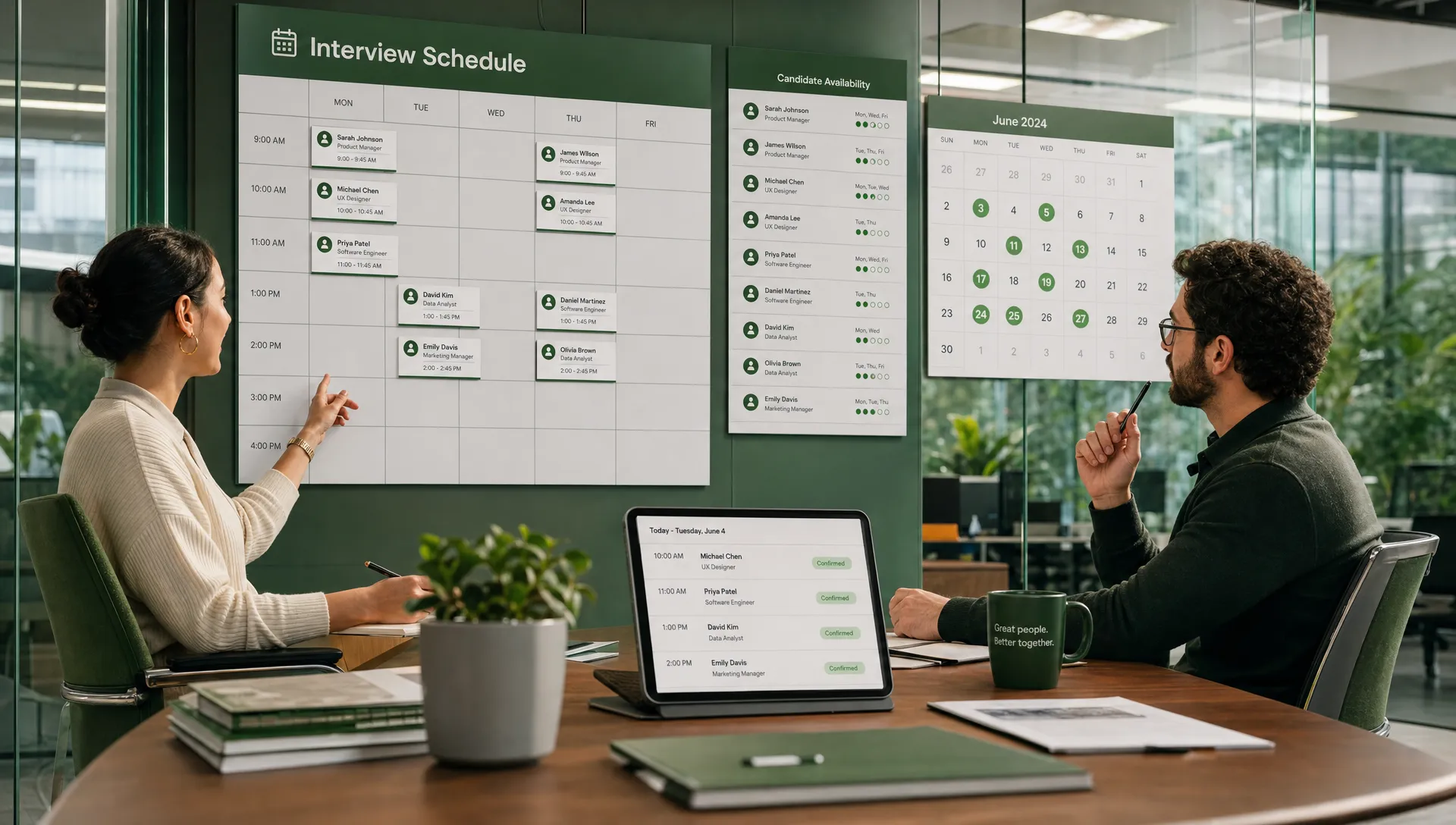
Interview scheduling is one of the least strategic tasks in recruiting, yet it consumes a surprising amount of time. AI scheduling tools reduce back-and-forth by matching candidate availability, recruiter calendars, hiring manager calendars, time zones, interview formats, and rescheduling needs.
The value is not just administrative. Faster scheduling protects candidate momentum. Delays between screening and interview often lead to drop-off, especially for competitive roles. Automated scheduling also creates a better experience for hiring managers because interviews appear with clearer context and fewer manual reminders.
This is one of the areas where connected workflow matters. Scheduling automation is most useful when it syncs with the pipeline, updates candidate status, and records the next step automatically. For a broader view of these workflow gains, see how AI in recruitment helps teams hire faster.
Talent rediscovery and internal mobility
Many teams spend heavily on sourcing while underusing the talent they already have. AI talent rediscovery helps recruiters search existing ATS and CRM records for candidates who match new roles, even if those candidates were originally considered for something else.
This technology is becoming more important in 2026 because talent databases are often full of hidden value. Past applicants, silver medalists, former contractors, referrals, and previously contacted prospects can become strong matches when role requirements change.
For internal HR teams, the same logic applies to internal mobility. AI can help surface employees whose skills, experience, or career interests align with open roles. That supports retention and reduces the need to source externally for every vacancy.
Interview intelligence
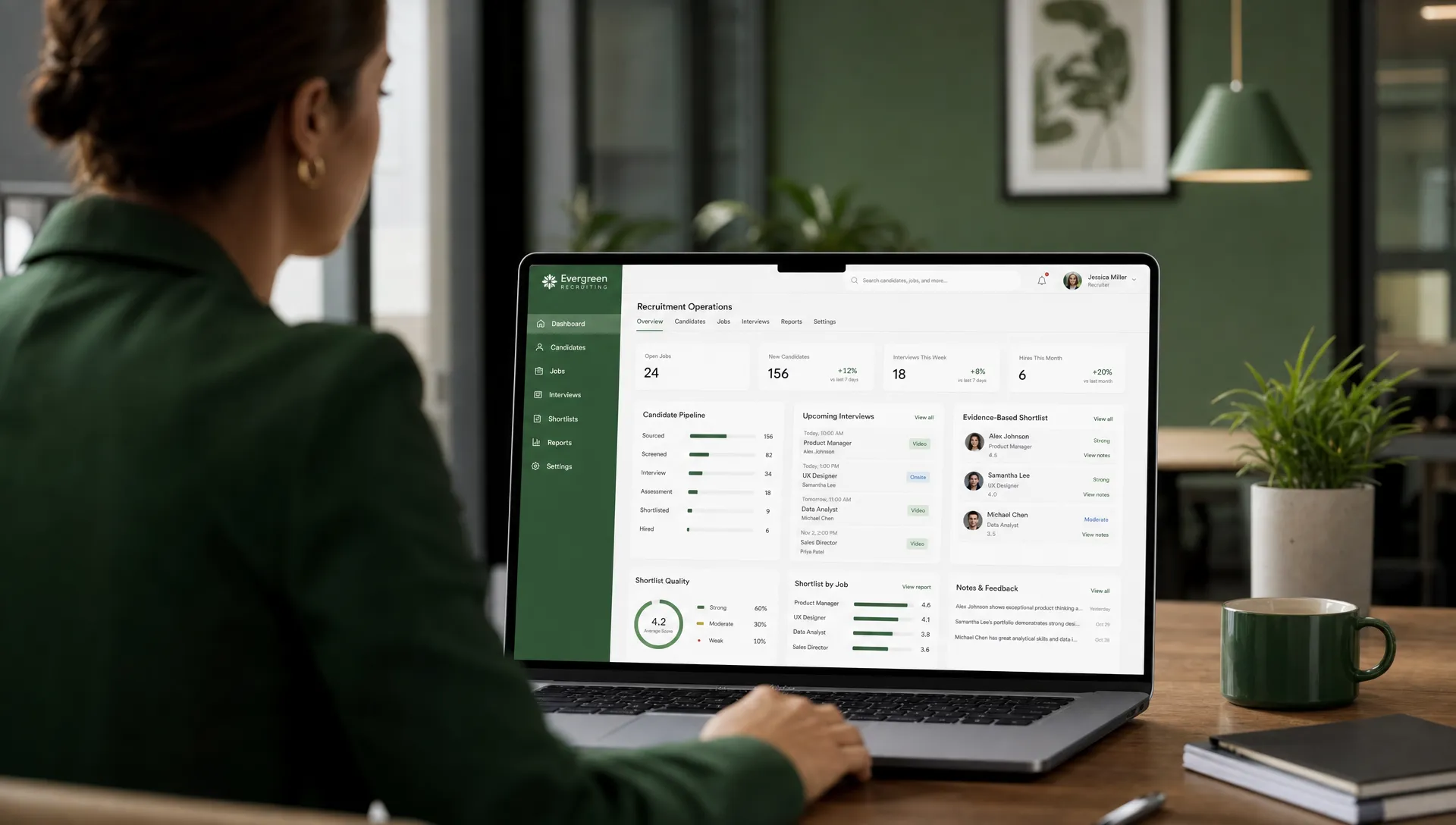
Interview intelligence tools help hiring teams capture notes, summarize conversations, structure feedback, and compare candidate responses against role criteria. This can reduce the common problem of interview feedback being delayed, incomplete, or based too heavily on memory.
In 2026, the best interview intelligence tools are not just meeting recorders. They support structured hiring. That means they can connect interview questions to competencies, summarize evidence, highlight unresolved concerns, and make it easier for hiring teams to compare candidates consistently.
However, this category requires care. Recording, transcription, and analysis should be handled with proper notice, consent where required, and clear data retention rules. Candidates should not feel that AI is being used secretly or unfairly.
Talent market intelligence
AI-powered market intelligence helps recruiters understand where talent is available, which skills are in demand, how job titles vary across industries, and how competitive a role may be. This is useful during intake, sourcing strategy, and expectation setting with hiring managers or clients.
For example, if a client wants a rare skill combination in a narrow geography, market intelligence can help the recruiter explain the likely tradeoffs. The team may need to adjust compensation, broaden location criteria, separate must-haves from nice-to-haves, or change the outreach strategy.
This technology is especially useful for agencies because it strengthens client advisory conversations. Recruiters can move from “we think this will be hard” to a more evidence-based discussion about talent supply and search strategy.
Compliance, privacy, and AI governance tools
As AI becomes more embedded in recruiting, governance is becoming a core technology category rather than an afterthought. Teams need to know which tools touch candidate data, how decisions are supported, whether outputs are reviewed by humans, and how records are stored.
Compliance-focused AI recruitment technologies may include audit logs, explainability features, approval workflows, data retention settings, permission controls, and bias monitoring support. These features help recruiting leaders answer practical questions: Who approved this message? Why was this candidate recommended? What data was used? Was a human involved before a decision was made?
For teams operating across jurisdictions, privacy and data handling are especially important. GDPR-focused workflows, candidate consent practices, and clear vendor documentation should be part of the buying process.
Agentic recruiting workflows
The most important shift in 2026 is the rise of workflow agents. Instead of using AI only for one task, recruiters are adopting systems that can move work across the hiring process.
An AI recruiting workflow might take a client brief, structure the intake, score candidates against the brief, draft outreach, suggest interview slots, summarize screening results, update the ATS, and notify the recruiter of the next best action. This does not mean the AI makes the hiring decision. It means the AI handles the operational glue that slows teams down.
This is where agencies and HR teams should be especially selective. A workflow agent is only useful if it integrates with the tools your team already uses. If recruiters must constantly copy information between systems, the AI has not solved the real problem.
What to prioritize when evaluating AI recruitment technologies
The market is crowded, and many tools sound similar in a demo. The strongest evaluation process starts with workflow fit rather than feature count.
| Evaluation area | What to ask before buying |
|---|---|
| Intake quality | Can the system turn briefs into clear, structured hiring criteria? |
| Evidence | Does candidate scoring show the reasoning behind recommendations? |
| Human control | Can recruiters approve messages, decisions, and next steps? |
| Integrations | Does it sync with your ATS, CRM, calendar, and communication tools? |
| Candidate experience | Does AI make communication faster and clearer without feeling impersonal? |
| Data handling | Are privacy, permissions, retention, and compliance expectations clear? |
| Reporting | Can the team measure speed, quality, conversion, and bottlenecks? |
A useful AI tool should make recruiters more effective, not force them into a completely new operating model. Before comparing vendors, define the hiring problems you want to solve: slow intake, inconsistent screening, weak outreach, scheduling delays, poor pipeline visibility, or candidate drop-off.
If you are building a buying checklist, CandiDesk’s guide on what to look for in AI recruitment software covers the core criteria in more detail.
Practical adoption advice for agencies and HR teams
AI adoption works best when it starts with a specific bottleneck and expands from there. A team that tries to automate everything at once often creates confusion, duplicate workflows, and low recruiter trust.
Start with a role family, business unit, or client segment where the process is repeatable and the pain is clear. Then define what AI is allowed to do, what requires human approval, and which metrics will determine success.
Useful metrics include time to first candidate contact, shortlist acceptance rate, interview scheduling time, candidate response rate, recruiter hours saved, candidate drop-off, and hiring manager satisfaction. These metrics keep the conversation grounded in hiring outcomes rather than novelty.
Recruiter enablement is just as important as the technology. Teams need training on how to review AI outputs, challenge weak recommendations, approve outreach, protect candidate data, and explain the workflow to candidates or hiring managers.
Where CandiDesk fits in the 2026 recruiting stack
CandiDesk is built for agencies and HR teams that want AI-first recruiting without giving up recruiter control. The platform supports smart intake from client briefs, candidate screening, evidence-based scoring, AI chat and voice calls, human-approved outreach drafting, interview scheduling automation, pipeline and calendar sync, multi-language outreach, ATS and CRM integrations, and GDPR-focused data handling.
That combination reflects where recruitment technology is heading in 2026: away from disconnected point solutions and toward AI assistants that support the full hiring workflow. The goal is not to replace recruiters. It is to remove repetitive work, improve consistency, and help teams respond faster while humans stay responsible for judgment, relationships, and final decisions.
Frequently Asked Questions
What are AI recruitment technologies? AI recruitment technologies are tools that use artificial intelligence to support recruiting tasks such as intake, screening, candidate matching, outreach, scheduling, interview documentation, pipeline updates, and reporting.
Will AI replace recruiters in 2026? No. The strongest AI recruiting systems are designed to assist recruiters, not replace them. AI can reduce repetitive work and improve consistency, but recruiters remain essential for judgment, relationship-building, negotiation, and hiring decisions.
Which AI recruitment technology should teams adopt first? Start with the biggest bottleneck. If shortlists are inconsistent, prioritize evidence-based screening. If candidates drop off, prioritize outreach and scheduling. If searches start poorly, improve intake first.
How can teams reduce risk when using AI in hiring? Use tools that provide explainable outputs, human approval workflows, clear audit trails, privacy controls, and documented data handling. Recruiters should review AI recommendations rather than accepting them automatically.
Is voice AI appropriate for candidate screening? Voice AI can be useful for availability checks, basic qualification questions, and after-hours candidate engagement. Teams should be transparent, collect only relevant information, and keep recruiters involved in meaningful evaluation decisions.
Bring AI-first recruiting into your workflow
The AI recruitment technologies shaping 2026 all point in the same direction: faster workflows, clearer evidence, better candidate communication, and stronger recruiter control.
If your team is ready to modernize intake, screening, outreach, scheduling, and pipeline updates in one connected workflow, explore CandiDesk and see how an AI-first recruitment platform can help your team hire more effectively.

Nikon Mazur
Nikon is a recruiting technology specialist with over five years of hands on experience building HR and hiring software, and the co founder of CandiDesk.
LinkedIn Profile