
recruitment software for staffing agencies
Recruitment Software for Staffing Agencies Explained
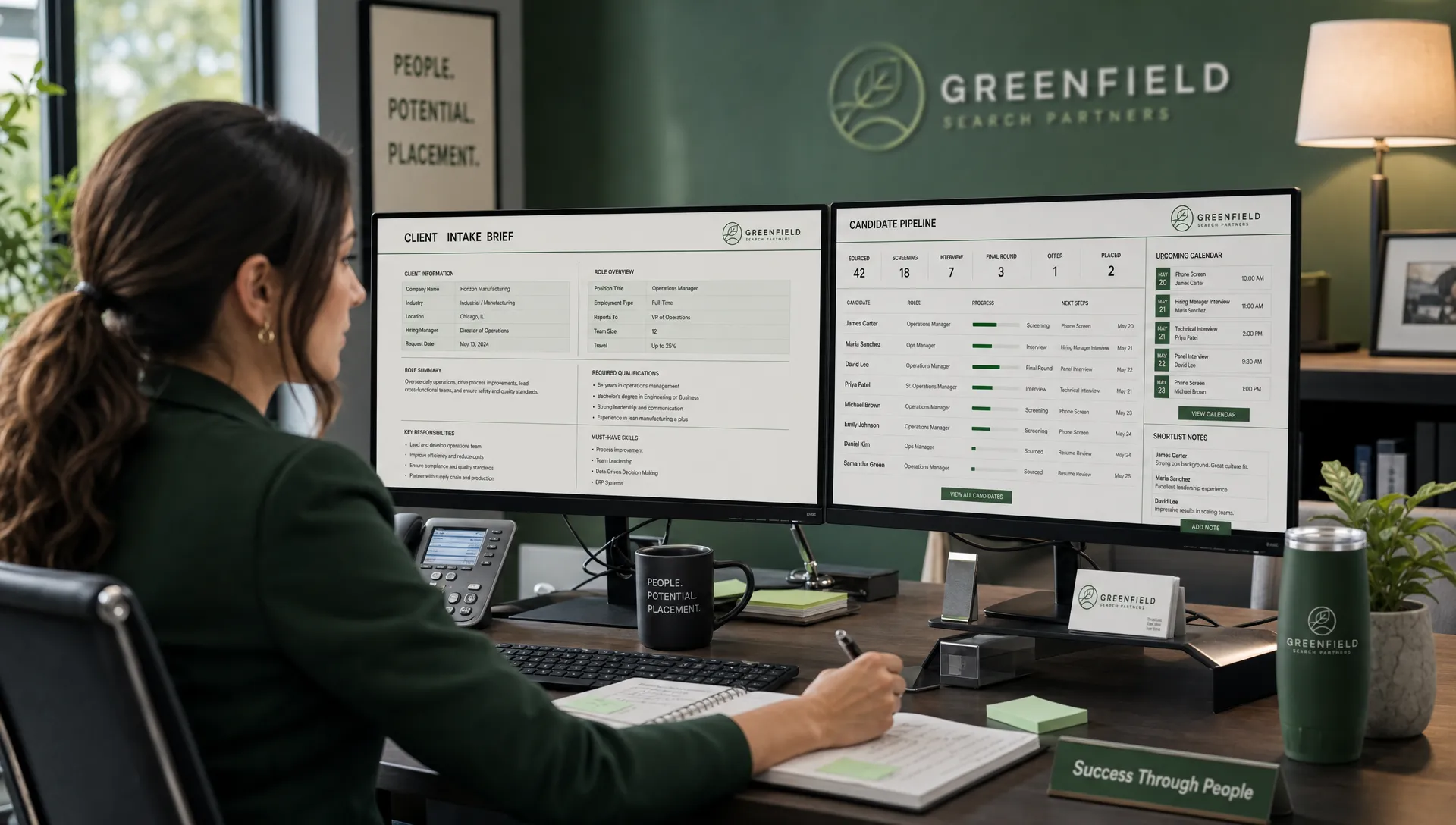
Staffing agencies live in a different recruiting reality than most in-house teams. They manage multiple clients, overlapping roles, active and passive candidates, shifting availability, urgent interview requests, and a constant need to prove progress. A basic spreadsheet or generic applicant tracking system can work for a while, but it usually breaks down as volume increases.
That is where recruitment software for staffing agencies comes in. The right platform helps recruiters centralize candidate data, move faster from intake to shortlist, keep clients updated, and reduce the manual work that slows down placements. In 2026, the best systems are no longer just databases. They combine workflow automation, AI assistance, integrations, and human oversight so recruiters can spend more time building relationships and less time chasing status updates.
What Recruitment Software for Staffing Agencies Actually Means
Recruitment software for staffing agencies is technology designed to manage the end-to-end agency hiring workflow. It supports the full cycle from client intake and job creation to sourcing, screening, outreach, interview scheduling, candidate submission, feedback, offer coordination, and redeployment.
Unlike a simple applicant tracking system, agency recruitment software has to serve two sides of the market. It must help recruiters manage candidates, but it also needs to support client relationships, job orders, submittals, and communication across many hiring processes at once.
A strong platform typically brings together several capabilities:
- Candidate and job tracking
- Client intake and requirement capture
- Screening and shortlisting workflows
- Outreach drafting and candidate engagement
- Interview scheduling and calendar coordination
- Pipeline updates and reporting
- ATS, CRM, email, calendar, and communication integrations
- Compliance and data handling controls
For staffing firms, the value is not only storing information. The real value is turning scattered recruiting activity into a consistent operating system that every recruiter can follow.
Why Staffing Agencies Need Specialized Recruitment Software
Agency recruiting is highly time-sensitive. A client may ask for a shortlist by the end of the day. A strong candidate may be interviewing elsewhere. A recruiter may be juggling ten open roles across several clients. When information sits in inboxes, notes, spreadsheets, and disconnected tools, the process becomes harder to control.
Specialized recruitment software gives staffing agencies a shared view of what is happening across roles and candidates. It reduces duplicated work, helps teams act on the most relevant candidates faster, and creates a clearer record of why each candidate was moved forward or rejected.
| Staffing agency challenge | How recruitment software helps |
|---|---|
| High-volume candidate pipelines | Centralizes profiles, statuses, communication history, and next steps |
| Multiple client requirements | Standardizes intake and keeps role criteria visible throughout screening |
| Fast turnaround expectations | Automates repetitive tasks like outreach drafts, scheduling, and status updates |
| Candidate drop-off | Improves follow-up consistency and reduces delays between steps |
| Recruiter handoffs | Gives teams a shared record of candidate conversations and pipeline progress |
| Compliance and audit needs | Preserves decision context, consent records, and communication history |
The best systems also support consistency. Two recruiters working the same role should not interpret requirements in completely different ways. When the platform captures structured intake, scoring criteria, and evidence, it becomes easier to align recruiters, clients, and hiring managers.
Core Workflows a Good Platform Should Support
Recruitment software should map to the way staffing agencies actually operate. Features matter, but only when they support the daily flow of filling roles quickly and responsibly.
Intake and role calibration
Every successful placement starts with a clear understanding of the role. In staffing, that intake often comes from a client brief, a hiring manager call, or a partially complete job description. Good software helps convert that information into structured criteria.
For example, the system should help recruiters capture must-have skills, nice-to-have experience, compensation range, location expectations, work authorization requirements, interview process, urgency, and any deal-breakers. When intake is structured, screening becomes more objective and outreach becomes more specific.
This is especially important for agencies because they often recruit for similar roles across different clients. Small differences matter. A software engineer role for one client may prioritize startup experience, while another may prioritize regulated industry experience. A structured intake process helps prevent those details from getting lost.
Candidate screening and scoring
Screening is one of the most time-consuming parts of agency recruiting. Recruiters may review hundreds of resumes, LinkedIn profiles, ATS records, and past candidate notes to build a shortlist. Recruitment software should help organize that process without turning it into a black box.
Evidence-based candidate scoring is particularly valuable. Instead of simply labeling someone as a “match,” the platform should show why. That may include skills found in the resume, relevant past roles, location fit, compensation alignment, or missing requirements that need recruiter review.
This matters because staffing agencies must often explain candidate recommendations to clients. A shortlist is more credible when recruiters can point to the evidence behind each submission.
Outreach and candidate engagement
Even the best candidate database has limited value if recruiters cannot engage candidates quickly. Modern staffing software often helps draft personalized outreach, follow-up messages, and interview reminders.
The key word is “draft.” Recruiters should remain in control of what gets sent, especially when messages represent the agency’s brand or discuss sensitive details. Human-approved outreach helps teams move faster while still protecting tone, accuracy, and candidate experience.
Multi-language outreach can also be useful for agencies recruiting across regions or talent markets. The goal is not to automate away relationships. It is to reduce the blank-page work that keeps recruiters from having more meaningful conversations.
Scheduling and pipeline sync
Scheduling can become a hidden bottleneck. Recruiters coordinate between candidates, clients, hiring managers, interview panels, and internal team members. When this happens manually, small delays can cause candidates to lose interest or accept another offer.
Recruitment software should help automate interview scheduling, calendar coordination, reminders, and pipeline updates. It should also sync activity back into the systems recruiters already use, such as an ATS, CRM, calendar, or communication platform. If automation creates another disconnected workspace, adoption will suffer.
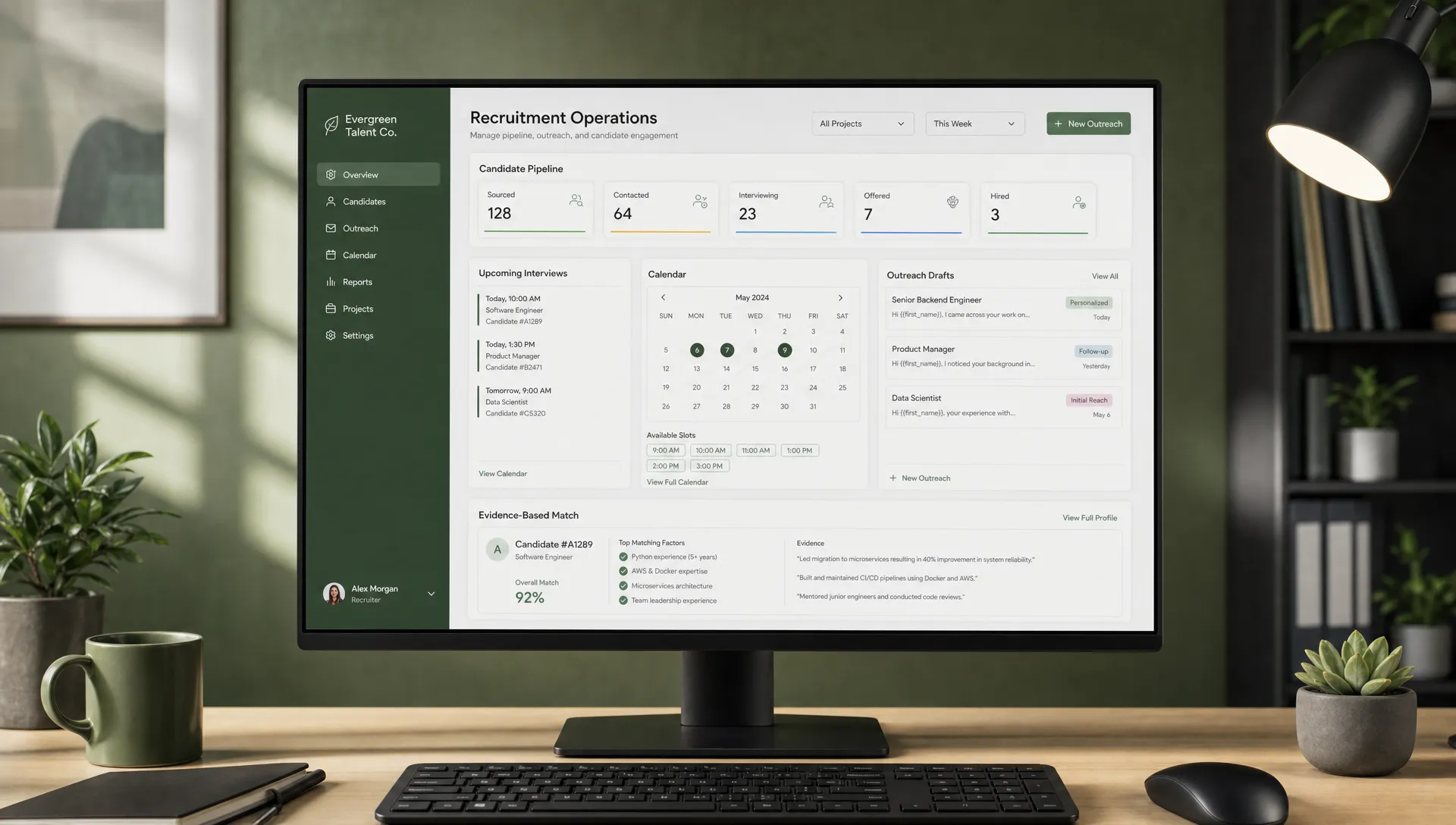
How AI Changes Staffing Agency Recruiting
AI is changing recruitment software because it can assist with repetitive, high-volume tasks that used to consume large parts of a recruiter’s day. For staffing agencies, this is especially relevant because speed and consistency directly affect revenue.
AI can help transform a client brief into structured intake notes, summarize candidate profiles, draft outreach, suggest screening questions, support chat or voice conversations, and keep pipeline records updated. Used well, it becomes an always-on assistant for recruiters.
Used poorly, AI can create risk. Staffing agencies should avoid systems that make unexplained decisions, send messages without approval, or apply criteria that recruiters cannot review. The best AI recruiting workflows keep humans in control and make the reasoning visible.
If you want a deeper look at this shift, CandiDesk’s guide on how AI in recruitment helps teams hire faster explains how AI can reduce manual work across intake, screening, outreach, scheduling, and pipeline updates.
| Manual bottleneck | AI-assisted improvement |
|---|---|
| Rewriting client briefs into job criteria | Converts unstructured notes into standardized intake fields |
| Reviewing large candidate pools | Highlights likely matches and shows supporting evidence |
| Writing repetitive outreach | Drafts personalized messages for recruiter approval |
| Chasing scheduling availability | Helps coordinate interview times and reminders |
| Updating pipeline records | Syncs statuses and activity back into connected systems |
The most effective agencies treat AI as workflow infrastructure, not as a replacement for recruiter judgment. Recruiters still build trust, sell opportunities, assess nuance, manage clients, and guide candidates through decisions.
ATS, CRM, and Recruitment Software: How They Fit Together
One reason this category can feel confusing is that many tools overlap. Staffing agencies often use an ATS, a CRM, sourcing tools, scheduling software, email platforms, calling tools, and reporting systems. Recruitment software may replace some of these tools, but often it acts as a connected layer across them.
| Tool type | Primary purpose | Agency use case |
|---|---|---|
| ATS | Track applicants and hiring stages | Manage candidates submitted to specific roles |
| CRM | Manage relationships and communication | Nurture clients, prospects, and candidate networks |
| Sourcing tool | Find potential candidates | Search external databases or talent networks |
| Scheduling tool | Coordinate interviews | Reduce back-and-forth between candidates and clients |
| AI recruitment platform | Automate and assist recruiting workflows | Support intake, screening, outreach, calls, scheduling, and updates |
For many staffing agencies, the best path is not ripping out every existing system. It is choosing software that integrates with the tools recruiters already rely on. This reduces disruption and makes it easier to introduce automation without losing historical data or established workflows.
What to Look for When Evaluating Recruitment Software
Buying recruitment software is not just a feature comparison exercise. The better question is: where does your agency lose time, quality, or control today?
If your biggest problem is slow client intake, prioritize structured intake and role calibration. If recruiters spend too much time reviewing profiles, focus on screening, evidence-based scoring, and search. If candidates drop off between steps, evaluate outreach, reminders, and scheduling. If leadership lacks visibility, look at pipeline sync and reporting workflows.
Here are the evaluation areas that matter most for staffing agencies.
Workflow fit
The software should match agency recruiting, not only corporate hiring. Look for support for multiple clients, multiple open roles, candidate ownership, submittals, interview coordination, and fast-moving pipelines. A platform built only for in-house HR may not handle the client-facing complexity of staffing.
Evidence and transparency
When software recommends candidates, recruiters should be able to see the reason. Evidence-based scoring helps teams explain decisions internally and to clients. It also makes it easier to spot when a recommendation is incomplete or based on weak signals.
For a more detailed evaluation framework, CandiDesk’s article on what to look for in AI recruitment software covers structured intake, human approval, scheduling automation, integrations, and recruiter control.
Human approval and brand control
Recruitment is communication-heavy. A rushed or inaccurate message can damage a candidate relationship or create confusion with a client. Any software that drafts outreach, handles candidate conversations, or supports calls should give recruiters clear approval controls and visibility into what is being said.
Integrations with existing systems
Most staffing agencies already have an ATS, CRM, email, calendar, and communication tools. Recruitment software should connect to those systems rather than forcing recruiters to duplicate data. Ask how pipeline updates, calendar events, outreach activity, and candidate notes sync across your stack.
Candidate experience
Speed is important, but candidate experience still matters. Software should help recruiters respond faster, communicate clearly, reduce scheduling friction, and avoid repetitive requests for the same information. The result should feel more human to the candidate, not less.
Compliance, Data Quality, and Trust
Recruitment software handles sensitive personal data. Staffing agencies should pay close attention to how platforms store, process, and use candidate information. This includes data retention, consent, access controls, audit trails, and how information moves between integrated systems.
AI adds another layer of responsibility. In the United States, the EEOC has issued guidance on assessing adverse impact in algorithmic employment tools, which is relevant for any organization using software to support selection decisions. Agencies should understand how a system ranks or scores candidates, what data it uses, and how humans can review the output.
For firms operating in or recruiting from Europe, GDPR also matters. The European Commission’s overview of EU data protection rules is a useful starting point for understanding obligations around personal data. Even when a platform is not making final hiring decisions, staffing agencies should still treat candidate data governance as a core buying criterion.
Good data quality is part of trust as well. If candidate records are outdated, duplicated, or missing context, automation will amplify those issues. Before implementing new software, agencies should review data hygiene, ownership rules, and field consistency.
A Practical Implementation Plan for Staffing Agencies
Recruitment software works best when it is introduced around a clear workflow, not dropped on recruiters as another tool to remember. A practical rollout usually starts with one team, one role type, or one client segment.
Before implementation, document the current process from intake to placement. Identify where information is lost, where delays occur, and where recruiters spend time on repeatable tasks. Then configure the platform around those points of friction.
A simple rollout plan can look like this:
- Map the workflow first: Define how intake, screening, outreach, scheduling, submittals, and updates should happen before configuring software.
- Standardize intake fields: Agree on the role criteria recruiters must capture for each job order.
- Pilot with a focused use case: Start with a role type or team where the pain is obvious and results are easy to observe.
- Set human approval rules: Decide which AI-drafted messages, calls, or updates require recruiter review before they move forward.
- Measure adoption and quality: Track whether recruiters are using the system, whether clients receive better shortlists, and whether candidates move through the process with fewer delays.
The agencies that get the most value are usually the ones that redesign the workflow while adopting the software. Automation cannot fix a process that no one has agreed on.
The Bottom Line
Recruitment software for staffing agencies is no longer just a place to store resumes. It is becoming the operational layer that helps agencies capture better intake, screen candidates more consistently, engage talent faster, coordinate interviews, and keep pipelines accurate.
The right platform should make recruiters faster without removing their judgment. It should integrate with existing tools, provide transparent candidate evidence, protect candidate experience, and keep humans in control of important communication and decisions.
For staffing firms competing on speed, quality, and trust, that balance is the difference between simply having more software and building a better recruiting operation.
Frequently Asked Questions
What is recruitment software for staffing agencies? Recruitment software for staffing agencies is a platform that helps firms manage client job orders, candidate pipelines, screening, outreach, interview scheduling, submittals, and placement workflows. It is designed for the high-volume, multi-client nature of agency recruiting.
How is recruitment software different from an ATS? An ATS mainly tracks candidates through hiring stages. Recruitment software for staffing agencies often goes further by supporting client intake, candidate engagement, outreach automation, scheduling, CRM connectivity, AI assistance, and pipeline updates across multiple clients and roles.
Should staffing agencies use AI recruitment software? AI can be valuable when it assists recruiters with intake, screening, outreach drafting, scheduling, and updates. Agencies should choose tools that show evidence, support human approval, and avoid unexplained automated decisions.
What features matter most for staffing agencies? The most important features depend on the agency’s bottlenecks, but structured intake, evidence-based candidate scoring, outreach support, scheduling automation, integrations, and compliance controls are usually high priorities.
Does recruitment software replace recruiters? No. The best recruitment software helps recruiters reduce repetitive administrative work so they can spend more time advising clients, building candidate relationships, qualifying nuance, and closing placements.
Move Faster Without Losing Recruiter Judgment
CandiDesk is an AI-first recruitment platform for agencies and HR teams. It supports smart intake from client briefs, candidate scoring with evidence, AI chat and voice calls, human-approved outreach drafting, interview scheduling automation, pipeline and calendar sync, multi-language outreach, ATS and CRM integrations, and GDPR-focused data handling.
If your team wants to reduce manual recruiting work while keeping recruiters in control, explore CandiDesk and see how an AI-first workflow can support faster, more consistent hiring.

Nikon Mazur
Nikon is a recruiting technology specialist with over five years of hands on experience building HR and hiring software, and the co founder of CandiDesk.
LinkedIn Profile