
online recruiting platforms
How Online Recruiting Platforms Streamline Hiring
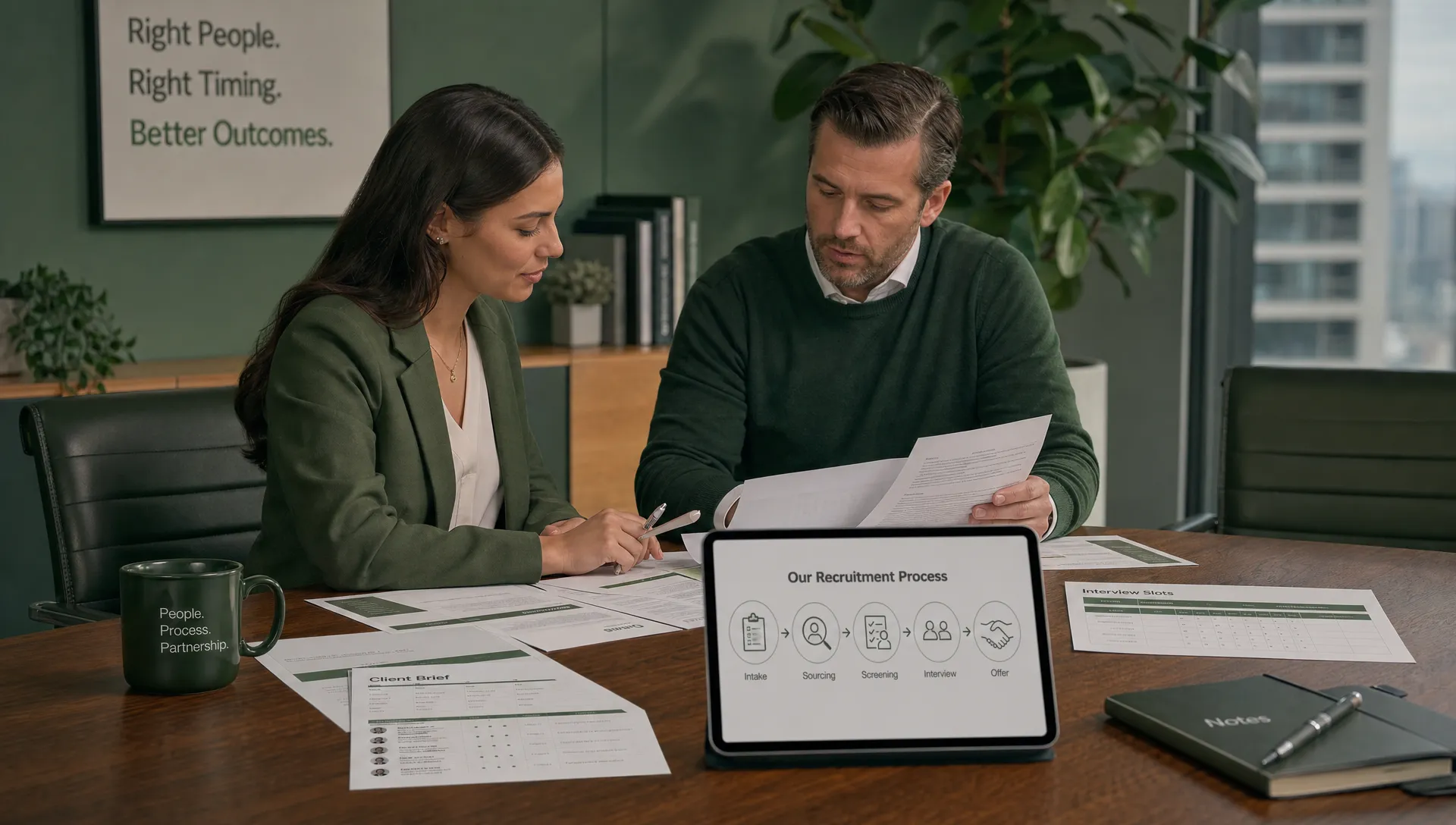
Online recruiting platforms have moved from “nice to have” software to core hiring infrastructure. For agencies, they reduce the manual coordination that slows down multi-client searches. For internal HR teams, they bring structure to intake, candidate screening, communication, scheduling, and pipeline visibility.
The real value is not simply posting jobs online or storing resumes in one place. The best platforms streamline hiring by turning fragmented recruiting activity into a connected workflow, where recruiters spend less time chasing information and more time making informed decisions.
What online recruiting platforms actually do
An online recruiting platform centralizes the steps involved in moving a candidate from first role discussion to interview and decision. Depending on the platform, that can include intake forms, candidate databases, resume screening, outreach, interview scheduling, communication history, pipeline stages, reporting, and integrations with an ATS or CRM.
Modern platforms increasingly use AI to assist with repetitive work. That might mean summarizing a client brief, scoring candidates against agreed criteria, drafting personalized outreach, or updating records after a call. The important distinction is that strong platforms assist recruiters rather than replace them. They create speed, consistency, and visibility while keeping human judgment in the loop.
For example, CandiDesk is built around that principle. It supports smart intake, candidate scoring with evidence, AI chat and voice calls, human-approved outreach drafts, interview scheduling automation, pipeline and calendar sync, ATS and CRM integrations, multi-language outreach, and GDPR-focused data handling.
Why hiring workflows slow down without a platform
Hiring rarely breaks because recruiters do not know what to do. It breaks because too many important steps depend on manual follow-up, scattered notes, and inconsistent communication.
A hiring manager may give an incomplete brief. A recruiter may screen resumes using criteria that were never fully documented. A strong candidate may wait two days for interview availability. A client may ask for pipeline status while the latest notes are still sitting in email threads, spreadsheets, or call summaries.
These delays compound. One unanswered intake question can lead to weak shortlists. One missed follow-up can lose a candidate. One untracked objection can cause the same problem to repeat across multiple roles.
Online recruiting platforms streamline hiring by reducing those handoffs. Instead of asking recruiters to remember every detail, the platform creates a shared operating system for the process.
The main ways online recruiting platforms streamline hiring
1. Structured intake creates a clearer starting point
A fast hiring process begins before sourcing starts. Recruiters need clarity on role requirements, must-have skills, compensation range, location expectations, interview steps, urgency, and decision criteria.
Online recruiting platforms can standardize intake so every new role starts with the same essential information. In agency recruitment, this helps translate client briefs into workable search criteria. In internal HR, it helps align recruiters, hiring managers, and interview teams before candidates enter the funnel.
Structured intake also reduces rework. If the criteria are captured clearly at the start, candidate screening can be more consistent, outreach can be more relevant, and interviews can focus on the right evidence.
For teams that want a deeper view of structure and control across the full hiring workflow, CandiDesk has covered how a recruitment management platform adds control from intake through pipeline updates.
2. Screening becomes more consistent and evidence-based
Manual resume review can be slow and uneven, especially when recruiters are balancing many roles. A platform can help by comparing candidate profiles against agreed criteria and surfacing relevant evidence, such as experience, skills, role fit, location match, or availability.
This does not mean every candidate should be reduced to a score. A score without context is risky. The stronger approach is evidence-based screening, where the platform helps explain why a candidate appears relevant and where the recruiter may need to check further.
That extra context matters. It supports better shortlists, makes recruiter recommendations easier to defend, and helps hiring managers review candidates faster.
3. Outreach is faster without becoming generic
Candidate outreach is one of the biggest time drains in recruiting. Recruiters need to personalize messages, follow up at the right time, answer candidate questions, and maintain a professional tone across channels.
Online recruiting platforms can streamline outreach by drafting messages based on role context, candidate background, and previous interactions. For many teams, the key safeguard is human approval. Recruiters should be able to review, edit, and approve messages before they are sent, especially when communication affects employer brand or candidate trust.
This approach helps teams move faster while avoiding the “mass automated message” problem. Candidates are more likely to engage when outreach feels relevant, timely, and accurate.
4. Scheduling becomes less dependent on back-and-forth emails
Interview scheduling often looks simple, but it consumes a surprising amount of recruiter time. Candidates and interviewers may be in different time zones. Calendars change. Hiring managers forget to confirm availability. Recruiters become the coordination layer for everyone.
Platforms streamline scheduling by connecting calendars, suggesting available slots, sending confirmations, and updating the pipeline when interviews are booked or rescheduled. That reduces administrative work and shortens the time between candidate interest and live conversation.
When interview volume is high, this can materially improve candidate experience. A candidate who can book quickly is less likely to lose momentum or accept a competing opportunity first.
5. Pipeline visibility improves decision-making
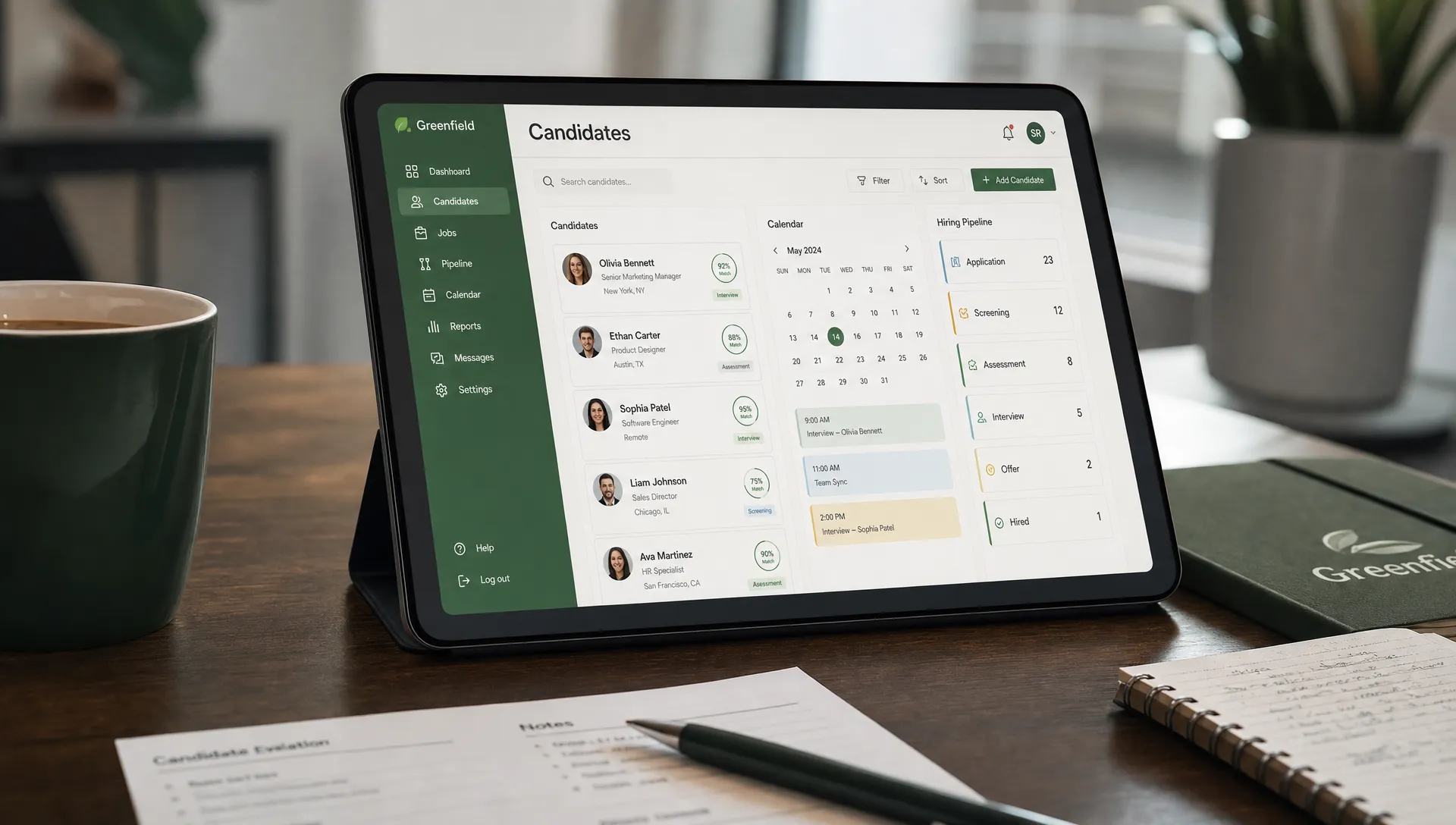
Hiring teams need to know what is happening in the pipeline without asking for status updates every day. Online recruiting platforms help by keeping candidate stages, communication history, interview outcomes, and next steps visible in one place.
This creates better operating rhythm. Recruiters can prioritize stuck candidates, managers can see where decisions are pending, and agency leaders can understand which client roles need attention.
| Hiring stage | Common manual bottleneck | How a platform streamlines it | Human control point |
|---|---|---|---|
| Intake | Incomplete role briefs and unclear criteria | Standardized intake captures requirements upfront | Recruiter validates role priorities |
| Screening | Slow resume review and inconsistent shortlists | Candidate profiles are compared against agreed criteria | Recruiter reviews evidence and fit |
| Outreach | Repetitive drafting and delayed follow-up | Messages can be drafted and queued faster | Recruiter approves communication |
| Scheduling | Calendar back-and-forth | Calendar sync and automated booking reduce coordination | Recruiter monitors exceptions |
| Pipeline updates | Notes spread across tools | Status changes and activity are synced | Recruiter confirms key decisions |
Why streamlined hiring matters more in 2026
Hiring teams are under pressure to do more with fewer resources. Candidates expect faster communication. Hiring managers want better shortlists. Agencies need to protect margins while managing multiple clients and roles. Internal HR teams need consistency across departments, geographies, and hiring volumes.
In that environment, workflow speed is not just an operational benefit. It affects candidate quality, employer brand, recruiter capacity, and business execution.
A company scaling sales, customer success, or product teams cannot afford weeks of avoidable delay between role approval and first interviews. The same is true for agencies supporting fast-growing clients. Recruiting has to connect with broader business goals, including market expansion and demand generation. When hiring supports a wider growth plan, teams may also coordinate with external partners such as growth marketing and innovation specialists to make sure talent plans match commercial priorities.
This is where online recruiting platforms are especially useful. They help hiring teams move from reactive coordination to repeatable execution.
What to look for in an online recruiting platform
Not every recruiting platform streamlines hiring in the same way. Some focus mainly on job posting. Others are built around sourcing, interviews, analytics, or AI automation. The best choice depends on your workflow pain points.
A practical evaluation starts with the work your team repeats most often. If recruiters lose time clarifying briefs, intake should be a priority. If candidate review is the bottleneck, look for transparent screening and evidence. If interview coordination is slow, scheduling automation and calendar sync may matter most.
Here are the capabilities that usually make the biggest difference:
- Structured intake: The platform should help capture role requirements, decision criteria, and client or hiring manager expectations in a consistent way.
- Evidence-based candidate review: Screening should show why someone is relevant, not just assign a black-box score.
- Human-approved communication: AI-drafted outreach is most useful when recruiters can review and approve messages before they send.
- Scheduling and calendar sync: Interview booking should reduce manual coordination, not add another separate tool to manage.
- ATS and CRM integrations: The platform should fit into existing systems so recruiters do not duplicate data entry.
- Compliance-aware workflows: Data handling, candidate consent, and auditability should be considered from the start.
If your team is comparing broader systems, this guide on how to choose a talent acquisition platform can help you evaluate options from a workflow-first perspective.
Responsible AI is part of streamlining, not an afterthought
AI can accelerate recruitment, but speed should not come at the cost of fairness, transparency, or recruiter accountability. Teams using AI-assisted hiring tools should understand how recommendations are generated, how candidate data is used, and where humans review decisions.
In the United States, the EEOC has published guidance on assessing adverse impact when employers use software, algorithms, and AI in employment selection. That guidance is a useful reminder that technology should support fair decision-making, not obscure it.
Responsible use of AI in hiring generally comes down to three principles. First, keep criteria job-related and consistent. Second, make recommendations explainable enough for recruiters to review. Third, preserve human oversight at key moments, especially screening, outreach, interview progression, and rejection.
CandiDesk takes this human-in-control approach by supporting AI-assisted workflows while requiring approval before messages are sent. For a more focused explanation of where AI reduces manual work, see how AI in recruitment helps teams hire faster across intake, screening, outreach, scheduling, and updates.
How to implement an online recruiting platform without adding complexity
The biggest implementation mistake is trying to automate a messy process before defining it. A platform can streamline hiring only when the team agrees on how hiring should work.
Start with one role type or one business unit. Map the current workflow from intake to interview scheduling. Identify where recruiters lose the most time and where candidates experience delays. Then configure the platform around those moments first.
For agencies, that may mean standardizing client intake, candidate scoring, and shortlist presentation. For HR teams, it may mean aligning hiring managers on role criteria, interview stages, and response expectations. In both cases, the goal is not to digitize every old habit. The goal is to create a cleaner workflow.
A phased rollout also helps recruiters trust the system. If the platform immediately removes repetitive work, adoption becomes easier. If it adds extra fields, duplicate updates, or unclear approvals, recruiters will find workarounds.
| Implementation focus | Why it matters | Practical sign of success |
|---|---|---|
| Workflow mapping | Prevents automating unclear processes | Recruiters can explain the new process in simple terms |
| Data integration | Reduces duplicate updates | Candidate and pipeline data stay consistent across tools |
| Approval rules | Keeps recruiters accountable | Outreach and progression decisions remain reviewable |
| Training | Builds confidence and adoption | Recruiters use the platform without reverting to spreadsheets |
| Measurement | Proves operational impact | Time-to-shortlist, booking speed, and response quality improve |
Metrics that show hiring is becoming more streamlined
A platform should improve observable recruiting outcomes. Before rollout, capture baseline data so you can compare performance after implementation.
Useful metrics include time-to-intake completion, time-to-shortlist, candidate response rate, interview booking time, recruiter administrative hours, pipeline aging, interview no-show rate, and hiring manager feedback quality. Agencies may also track submittal-to-interview ratio, client response time, and recruiter capacity per open role.
Do not measure only speed. A process can be fast and still produce poor matches. Pair efficiency metrics with quality indicators, such as shortlist relevance, candidate experience feedback, and hiring manager satisfaction. The goal is streamlined hiring, not rushed hiring.
Common mistakes to avoid
One common mistake is treating the platform as a replacement for recruiter expertise. Software can organize work, surface evidence, and reduce coordination, but recruiters still need to interpret context, handle nuance, and build trust with candidates and hiring managers.
Another mistake is choosing a platform based only on feature count. A long feature list is less useful than a workflow that recruiters will actually use every day. The best platform is the one that reduces friction in your specific hiring process.
Finally, avoid disconnecting automation from candidate experience. Fast outreach, scheduling, and updates should feel helpful to candidates, not robotic. Human review, clear communication, and timely follow-up remain essential.
Frequently Asked Questions
What are online recruiting platforms? Online recruiting platforms are cloud-based systems that help hiring teams manage recruiting workflows such as intake, candidate screening, outreach, interview scheduling, pipeline tracking, and reporting.
How do online recruiting platforms streamline hiring? They reduce manual work, centralize candidate and role information, standardize screening, automate scheduling, draft outreach, and keep pipeline updates visible across the hiring team.
Do online recruiting platforms replace recruiters? No. The strongest platforms support recruiters by handling repetitive tasks and organizing information while recruiters retain control over judgment-based decisions, communication, and candidate relationships.
Are online recruiting platforms useful for staffing agencies? Yes. Agencies often manage multiple clients, roles, and candidate pipelines at once, so structured intake, evidence-based screening, outreach support, and CRM or ATS integrations can save significant time.
What should HR teams prioritize when choosing a platform? HR teams should prioritize workflow fit, ease of adoption, ATS integration, transparent screening, scheduling automation, human approval points, and compliance-aware data handling.
Streamline hiring without losing recruiter control
Online recruiting platforms work best when they remove repetitive work while preserving the human judgment that great hiring requires. The result is a faster, clearer, and more consistent process for recruiters, hiring managers, candidates, and clients.
CandiDesk helps agencies and HR teams streamline hiring with AI-first workflows for intake, screening, outreach drafting, interview scheduling, pipeline updates, and communication, while keeping recruiters in control before messages are sent.

Nikon Mazur
Nikon is a recruiting technology specialist with over five years of hands on experience building HR and hiring software, and the co founder of CandiDesk.
LinkedIn Profile