
candidate relationship management software
How CRM Software Improves Recruiter Follow-Up
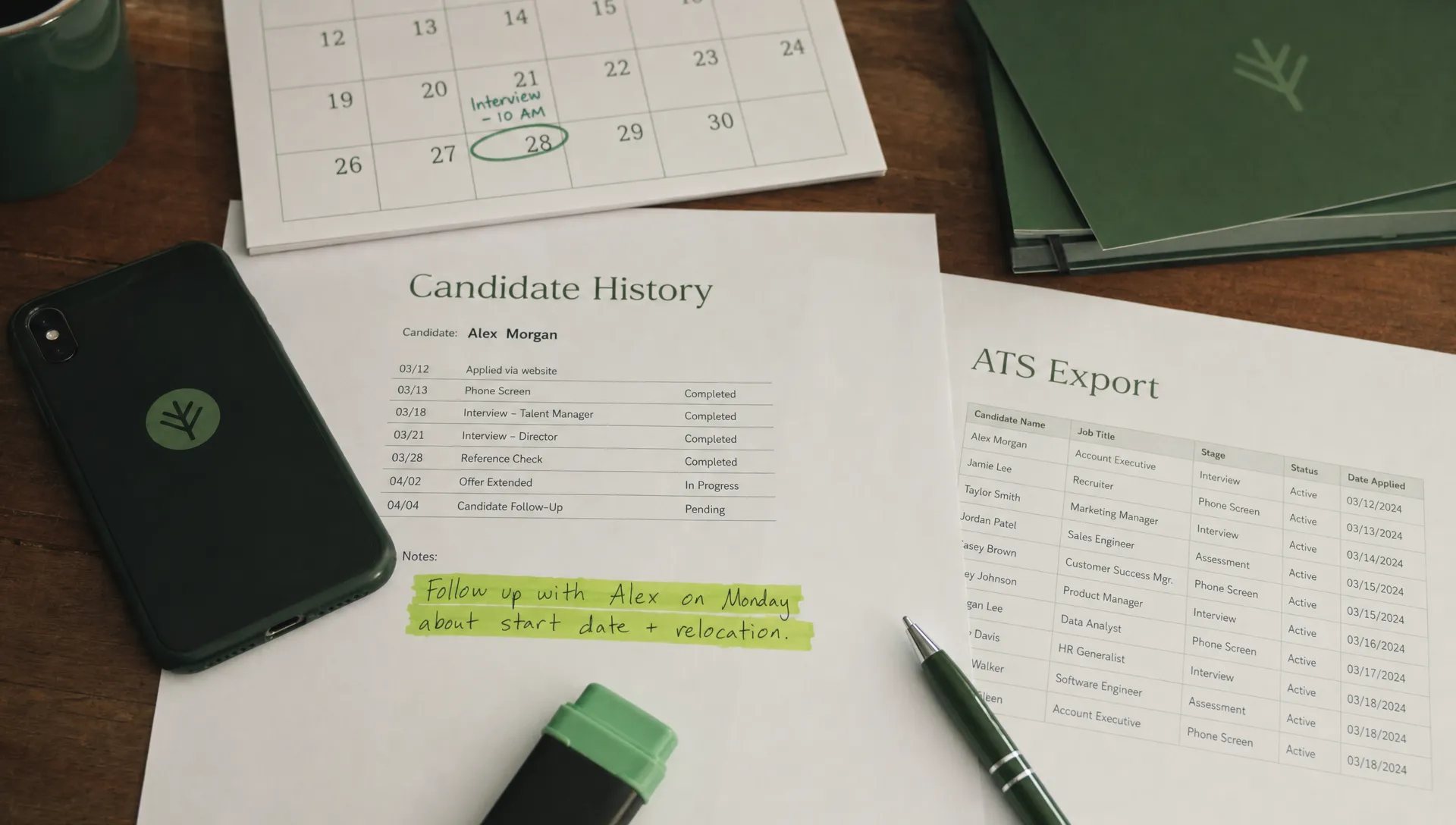
Recruiters rarely lose candidates because they forgot how to recruit. They lose momentum because follow-up lives across inboxes, calendars, spreadsheets, ATS notes and personal reminders. For recruiting teams, candidate relationship management software turns follow-up from a memory game into a structured, trackable workflow that keeps every promising candidate moving forward.
That matters because follow-up is not one message. It is the reminder after a screening call, the update after a hiring manager review, the check-in with a passive candidate who is not ready yet, the reschedule request and the post-interview note that preserves trust. When those moments are handled consistently, recruiters spend less time chasing context and more time building relationships.
Why recruiter follow-up breaks down
Most recruiting teams care deeply about candidate communication, yet their systems often make it hard to deliver. A recruiter might source a strong candidate in LinkedIn, log a note in the ATS, email from Gmail, schedule through a calendar tool and receive hiring manager feedback in Slack. Each tool contains part of the truth, but none of them shows the whole relationship.
The result is predictable. Follow-up becomes dependent on individual discipline rather than a shared process. One recruiter may keep detailed reminders, another may rely on memory and a third may have no visibility when covering a colleague's role. Candidates then experience delays, repeated questions or vague updates even when the team is working hard behind the scenes.
Poor follow-up also creates internal friction. Recruiters have to ask whether a candidate replied, whether a hiring manager reviewed the profile, whether interview availability was collected and whether the next message has been sent. These small checks add up across dozens of roles and hundreds of candidates.
Where candidate relationship management software improves recruiter follow-up
A recruiting CRM gives teams a relationship layer around the hiring process. Instead of treating every candidate interaction as an isolated task, it connects history, status, preferences and next steps in one place. That makes follow-up easier to prioritize and easier to personalize.
At minimum, a strong CRM process should help recruiters answer four questions quickly: who needs attention, why now, what should be said and what happened last. If those answers require searching five systems, follow-up will slow down. If they are available in context, recruiters can act while the opportunity is still warm.
| Follow-up problem | How CRM software helps | Recruiter impact |
|---|---|---|
| Candidates get no update after applying | Creates reminders based on stage changes | Fewer silent gaps in the process |
| Passive candidates are forgotten | Stores nurture timelines and prior context | Better long-term talent relationships |
| Messages feel generic | Keeps notes, preferences and role fit evidence | More relevant outreach |
| Handoffs are messy | Centralizes communication history | Easier team coverage |
| Interviews require manual chasing | Connects scheduling and pipeline status | Less admin work between steps |
The best follow-up systems do not replace recruiter judgment. They make judgment easier to apply because the recruiter can see the relationship clearly before taking action.
From reminders to relationship intelligence
Basic reminders are useful, but they only solve part of the problem. If a recruiter receives a reminder that says follow up with Maya, they still need to know what Maya cares about, which role she discussed, whether she prefers phone or email and whether the hiring manager had concerns. When candidate relationship management software captures those signals, the reminder becomes a meaningful next action rather than another item on a crowded task list.
This is where CRM workflows improve both speed and quality. A recruiter can segment candidates by skill set, availability, location, salary range, language preference or previous role interest. They can then tailor follow-up based on what is actually known, not by sending the same broad message to everyone.
For staffing agencies, this is especially valuable. A candidate who is not right for one client may be ideal for another client three weeks later. Without relationship history, that candidate can disappear into the database. With structured notes and follow-up triggers, the agency can re-engage at the right moment with a relevant opportunity.
Recruiting CRM data also helps managers coach teams. If certain stages have long response delays or candidates often go quiet after screening, leaders can inspect the workflow rather than guessing. Follow-up becomes measurable without turning recruiters into data clerks.
What better follow-up looks like across the funnel
Follow-up should change based on where the candidate is in the journey. A sourced prospect needs a different message from an applicant waiting for feedback, and an interviewed finalist needs a different level of urgency from someone in a long-term nurture pool.
At the sourcing stage, CRM software helps recruiters track who has been contacted, which message angle was used and whether the candidate has engaged before. During screening, it helps preserve the evidence behind a candidate's fit, so the next message reflects real context. After interviews, it helps recruiters coordinate feedback, schedule next steps and keep candidates informed even when the final decision is not ready.
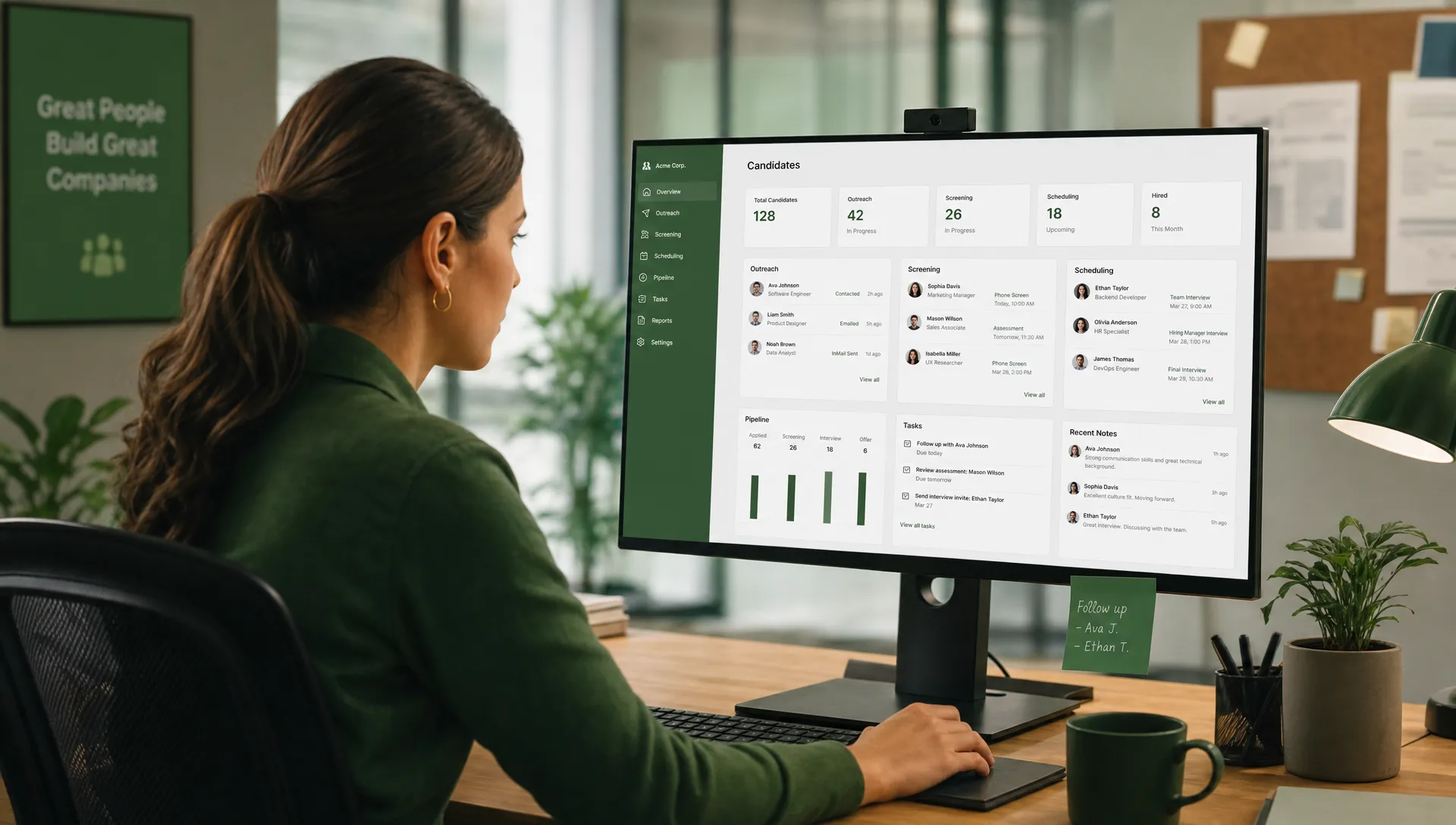
Strong follow-up also protects candidate trust. Even a short update can be valuable when it is timely and specific. For example, saying the hiring manager is reviewing your portfolio today and I expect to update you by Thursday is better than saying we will be in touch soon. CRM context makes those specific updates easier because the recruiter does not have to reconstruct the process from scratch.
If your team is also trying to improve the broader candidate journey, CandiDesk has covered how candidate experience platforms boost conversions by reducing friction at key hiring moments.
How AI strengthens CRM follow-up without removing recruiter control
AI can make follow-up faster, but recruiting teams should be careful about where automation starts and ends. The goal is not to let a system send careless messages at scale. The goal is to reduce administrative drag while preserving a human review point for communication that affects a candidate's career.
With AI, candidate relationship management software can summarize prior interactions, draft outreach, identify stalled candidates, suggest next steps and help recruiters prioritize who needs attention. That is useful only when the system is grounded in real recruiting context, such as intake criteria, candidate evidence, pipeline stage and conversation history.
CandiDesk is built for this assistant model. Based on the platform's described capabilities, it supports intake from client briefs, candidate screening, outreach drafting, interview scheduling, pipeline updates, ATS and CRM integrations, multi-language outreach and AI chat or voice workflows while keeping recruiters in control through human-approved messaging.
That human approval layer matters. Follow-up often involves nuance: explaining a delay, clarifying a role mismatch, re-engaging a senior passive candidate or handling a candidate who has competing offers. AI can prepare the draft and gather the context, but recruiters should decide what tone, timing and commitment are appropriate.
For teams evaluating automation more broadly, this guide on what to look for in AI recruitment software explains why evidence, approvals and integrations should matter as much as speed.
Signals that your team needs a stronger follow-up system
A recruiting team does not need to be chaotic to need better CRM discipline. Often, the symptoms are subtle. Recruiters are busy, candidates are qualified and hiring managers are engaged, yet the process still leaks momentum.
Common warning signs include candidates asking for updates that should have been sent already, recruiters rebuilding context before every message, passive candidates going cold after one campaign, interviews being delayed by calendar back-and-forth and managers lacking visibility into which candidates are waiting on action.
The right candidate relationship management software helps by turning these signs into workflow improvements. Instead of asking recruiters to try harder, it gives them a system that surfaces stalled relationships, connects follow-up to pipeline events and reduces the number of manual checks required to move candidates forward.
This also gives recruitment leaders more control. They can standardize important moments, such as post-screening updates or interview reminders, without forcing every message to sound robotic. That balance is important for agencies that need consistency across clients and for HR teams that need to protect employer brand.
Choosing CRM software for recruiter follow-up
Not every CRM or ATS add-on solves the follow-up problem. Some tools store candidate records but do little to guide action. Others automate messaging but provide weak visibility into why a candidate is being contacted. Recruiting teams should look for software that supports both relationship context and operational control.
A practical evaluation should focus on the workflow recruiters actually run every day. Can the system capture intake requirements clearly? Can it connect candidate scoring to evidence? Can recruiters review AI-drafted outreach before it sends? Does it sync with calendars, pipelines, ATS records and communication tools? Can it support follow-up outside office hours without creating unmanaged automation?
Good candidate relationship management software should also respect data handling requirements. Recruiting records may include sensitive personal information, so teams need clear controls around access, retention and compliance. CandiDesk describes its approach as GDPR-focused, which is the right direction for teams operating in or hiring across regulated markets.
If your main challenge is workflow control across intake, screening, outreach and scheduling, you may also find this breakdown of how a recruitment management platform adds control useful.
FAQ
What is the difference between an ATS and a recruiting CRM? An ATS usually manages applicants through an active hiring process, while a recruiting CRM focuses on longer-term candidate relationships, outreach, nurturing and follow-up. Many teams use both, especially when they need to manage active applicants and passive talent pools.
How does candidate relationship management software improve follow-up quality? It centralizes candidate history, tracks next steps, supports reminders, connects messages to pipeline status and helps recruiters personalize outreach based on real context rather than memory.
Can CRM follow-up be automated without sounding impersonal? Yes, but automation should assist rather than replace recruiters. Drafting, reminders, scheduling and status updates can be automated while recruiters approve sensitive messages and adjust tone for the candidate relationship.
Is recruiting CRM software useful for staffing agencies? Yes. Agencies often manage large talent pools across multiple clients, so structured follow-up helps them re-engage candidates when a better-fit role appears later.
Bring more consistency to recruiter follow-up
Follow-up is one of the easiest parts of recruiting to underestimate and one of the most expensive to let slip. Candidates remember whether communication was timely, specific and respectful. Recruiters remember how much time they lost chasing scattered context.
CandiDesk helps agencies and HR teams automate the busywork around intake, screening, outreach drafting, interview scheduling and pipeline updates while keeping recruiters in control. If your team wants faster follow-up without losing the human judgment that makes recruiting work, explore CandiDesk's AI-first recruitment platform.

Nikon Mazur
Nikon is a recruiting technology specialist with over five years of hands on experience building HR and hiring software, and the co founder of CandiDesk.
LinkedIn Profile