
ai tool for resume screening
How an AI Tool for Resume Screening Improves Shortlists
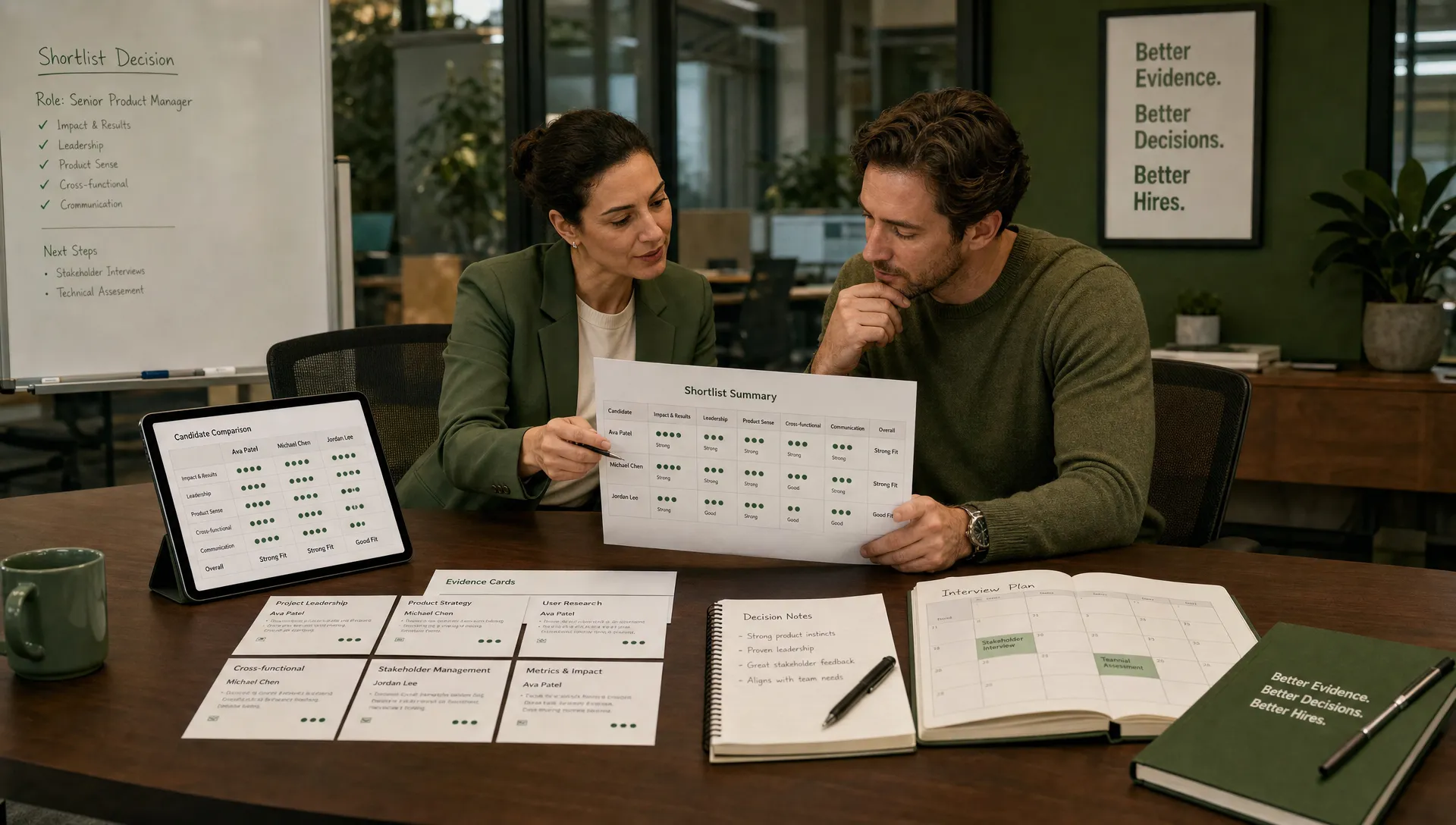
A shortlist is supposed to be the recruiter’s sharpest thinking distilled into a focused set of candidates. In practice, it often becomes a compromise between time pressure, inconsistent resume interpretation, incomplete job requirements, and the limits of human attention.
That is where an AI tool for resume screening can improve the quality of shortlists, not just the speed of screening. The real value is not replacing recruiter judgment. It is helping recruiters apply the same criteria consistently, surface evidence from every resume, and explain why each candidate deserves a closer look.
For agencies and HR teams, this matters because a weak shortlist creates downstream costs. Hiring managers lose confidence. Recruiters spend more time defending decisions. Candidates wait longer for updates. Interview slots get used on poor fits while strong candidates move on.
Used well, AI-assisted screening turns the shortlist from a subjective stack ranking into a structured, evidence-backed recommendation.
Why shortlists break down before interviews begin
Most shortlist problems start earlier than resume review. If the job brief is vague, the screening process will be vague too. A recruiter may know the client wants a “strong operator,” a “hands-on marketer,” or a “senior engineer,” but those phrases do not translate cleanly into consistent screening criteria.
Manual screening also depends heavily on timing and context. A recruiter reviewing resumes at 9 a.m. may notice details that are missed at 5 p.m. Another recruiter may prioritize brand-name employers, while someone else may focus on project ownership or tenure. Neither approach is automatically wrong, but inconsistency makes shortlists harder to trust.
Common causes of weak shortlists include:
- Overweighting keywords while missing equivalent experience
- Relying on job titles that vary widely between companies
- Screening before must-have and nice-to-have criteria are clearly separated
- Missing evidence hidden in project descriptions, achievements, or tools used
- Advancing candidates because they look familiar rather than because they match the role
This is why a better shortlist starts with structure. AI can help, but only if it is grounded in a clear intake and controlled by recruiters.
What an AI tool for resume screening actually does
An AI tool for resume screening reads candidate resumes and compares them against job-specific criteria. The best systems do more than keyword matching. They extract relevant signals, organize those signals into a scoring framework, and show the evidence behind each recommendation.
For example, a recruiter hiring a customer success manager may want to know whether a candidate has handled enterprise accounts, managed renewals, worked with CRM systems, collaborated with product teams, and reduced churn. A resume may not use the exact words “enterprise CSM,” but it may still contain proof of the required experience.
AI can help identify that proof faster and more consistently.
| Screening task | Manual-only approach | AI-assisted approach |
|---|---|---|
| Intake interpretation | Recruiter translates the brief from memory | Criteria are structured from the brief before screening starts |
| Resume review | Recruiter scans for titles, keywords, and patterns | AI extracts relevant evidence against the role requirements |
| Candidate comparison | Candidates are compared informally | Candidates are scored against the same rubric |
| Shortlist explanation | Recruiter explains decisions from notes or memory | Each recommendation includes supporting evidence |
| Hiring manager handoff | Shortlist may require extra clarification | Shortlist includes clearer rationale and tradeoffs |
This does not mean every score should be accepted automatically. It means recruiters get a stronger first pass, better evidence, and more time to apply judgment where it matters.
If you are evaluating systems, look for more than generic automation. A strong platform should support structured intake, evidence-based candidate scoring, human approval, scheduling automation, and clean integrations. CandiDesk covers these evaluation areas in more detail in its guide on what to look for in AI recruitment software.
How AI improves shortlist quality
It converts vague requirements into structured criteria
A shortlist is only as good as the criteria behind it. If the intake call ends with unclear priorities, screening becomes guesswork.
AI-assisted workflows can help turn client briefs or hiring manager notes into structured screening criteria. That might include required skills, preferred experience, deal breakers, seniority indicators, location or language needs, compensation constraints, and evidence that proves each requirement.
This is especially useful for agencies, where recruiters often screen for multiple clients, each with different expectations. A structured intake reduces the risk of screening every role through the same mental template.
The key is to keep the recruiter in control. AI can draft and organize the criteria, but recruiters and hiring managers should confirm what matters before resumes are scored.
It scores candidates with evidence, not just labels
A score without evidence is not very useful. If a tool simply says Candidate A is an 86 percent match and Candidate B is a 72 percent match, recruiters still need to know why.
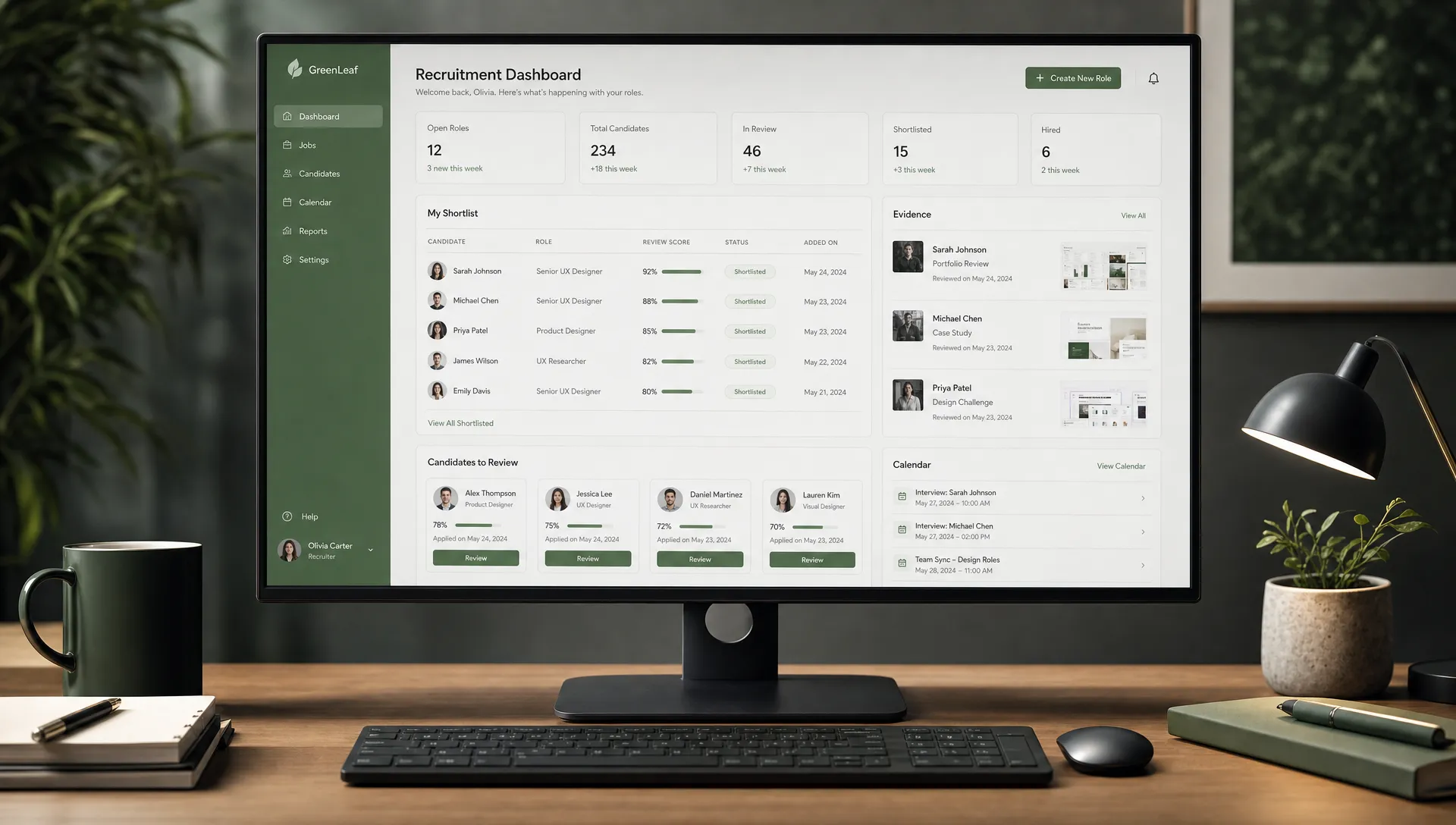
Better AI resume screening shows the evidence behind the score. It may point to a specific project, role responsibility, certification, tool, industry exposure, or measurable outcome from the resume. That makes the shortlist easier to review and easier to defend.
Evidence-based scoring also helps hiring managers trust the process. Instead of receiving a list of names with vague comments like “good background,” they can see why the candidate aligns with the role.
For example, a stronger shortlist note might say: “Candidate has five years of B2B SaaS account management experience, handled renewals for enterprise accounts, used Salesforce and Gainsight, and reported a 15 percent churn reduction initiative.” That is more useful than “Strong customer success profile.”
It finds transferable experience that keyword filters miss
Traditional resume filters often reward exact wording. That can exclude qualified candidates who describe their work differently.
AI can improve shortlists by identifying adjacent or transferable experience. A candidate may not have the exact job title listed in the brief, but may have performed the same core work. A recruiter hiring for a revenue operations role, for instance, may find relevant experience in candidates who held titles such as sales operations analyst, CRM operations manager, or GTM systems specialist.
This is not about lowering standards. It is about avoiding shallow filtering. The goal is to assess whether the candidate has done comparable work, in a comparable environment, at the level required.
For specialized roles, recruiters can also calibrate screening criteria against real-world service scopes. For example, when hiring for campaign management or growth marketing, reviewing how external teams describe managed digital marketing services can help clarify whether candidates have evidence of planning, execution, reporting, and client communication, rather than only broad marketing exposure.
It reduces shortlist noise
Hiring managers do not want every “maybe.” They want a shortlist that respects their time.
AI helps by ranking candidates against the agreed criteria and flagging gaps before the recruiter sends the shortlist. A candidate may look impressive overall but lack a true must-have. Another may appear less polished but align closely with the role’s core needs.
The best shortlist is not always the list of the most decorated resumes. It is the list of candidates most likely to succeed in the specific role.
AI can also help distinguish between must-have gaps and acceptable tradeoffs. For example, a candidate may lack one preferred tool but have deep experience with a similar system. Another may have the right tool experience but no evidence of ownership, stakeholder management, or scale.
That distinction is where recruiter judgment remains essential.
It speeds up the shortlist without making it careless
Speed matters because strong candidates move quickly. But speed without quality creates rework.
AI improves the shortlist by handling repetitive screening tasks quickly, allowing recruiters to spend more time on judgment, outreach, candidate motivation, and hiring manager alignment. This is the same reason AI can improve the broader hiring workflow across intake, screening, outreach, scheduling, and pipeline updates.
CandiDesk, for example, is designed for agencies and HR teams that want to automate these repetitive steps while keeping recruiters in control. Its workflow includes smart intake from client briefs, candidate scoring with evidence, AI chat and voice calls, human-approved outreach drafting, interview scheduling automation, pipeline and calendar sync, multi-language outreach support, ATS and CRM integrations, and GDPR-focused data handling.
The important phrase is “human-approved.” AI should assist the recruiter, not silently make final hiring decisions.
What a better AI-assisted shortlist looks like
A high-quality shortlist should help the hiring manager make a decision quickly. It should answer three questions:
- Why is this candidate included?
- What evidence supports the recommendation?
- What risks or gaps should we discuss in interview?
A strong AI-assisted shortlist might include candidate summaries like this:
| Shortlist element | What it should include | Why it matters |
|---|---|---|
| Match summary | A concise explanation of fit against the role | Helps hiring managers scan quickly |
| Evidence | Resume details that support each key requirement | Makes the recommendation auditable |
| Gaps | Missing or unclear criteria | Prevents surprises later in the process |
| Suggested interview focus | Topics to validate in the next step | Improves interview quality |
| Outreach status | Whether the candidate has been contacted or scheduled | Keeps the pipeline moving |
This format improves communication between recruiters and hiring managers. It also reduces the common back-and-forth where managers ask why certain people were included or why others were excluded.
How to use AI screening without losing human judgment
AI can make screening more consistent, but it must be implemented carefully. Recruiting decisions affect people’s careers, and employers need accountable processes.
The NIST AI Risk Management Framework emphasizes that trustworthy AI should be valid, reliable, safe, secure, accountable, transparent, explainable, privacy-enhanced, and fair. In recruitment, that means teams should understand what the tool is doing, monitor its outputs, and avoid treating automated recommendations as unquestionable truth.
The U.S. Equal Employment Opportunity Commission has also published guidance on assessing adverse impact when employers use software, algorithms, and AI in employment selection. The EEOC guidance makes clear that employers can still be responsible if selection tools create unlawful disparate impact, even when those tools come from a vendor.
Practical safeguards include:
- Confirming that screening criteria are job-related before using them
- Reviewing AI recommendations before candidates are advanced or rejected
- Looking at score explanations, not only score numbers
- Monitoring pass-through rates across candidate groups where legally and appropriately possible
- Training recruiters to challenge weak or irrelevant recommendations
- Keeping records of why candidates were shortlisted
This is also why human approval workflows matter. CandiDesk’s approach keeps recruiters involved in outreach and workflow decisions rather than letting AI operate unchecked. For a broader framework, see CandiDesk’s guide to AI hiring best practices for agencies and HR teams.
Metrics that show whether AI is improving your shortlists
If AI is working, the impact should show up in hiring workflow metrics and shortlist quality metrics. Speed alone is not enough. A tool that screens faster but sends weaker candidates is not improving the process.
Track outcomes before and after implementation so you can see whether shortlist quality is actually improving.
| Metric | What it measures | What improvement looks like |
|---|---|---|
| Time to shortlist | How long it takes to send qualified candidates | Shortlists are delivered faster without more rework |
| Hiring manager shortlist acceptance rate | How many submitted candidates managers agree to interview | A higher percentage of shortlisted candidates move forward |
| Interview-to-offer ratio | How many interviews are needed to reach an offer | Fewer low-fit interviews are scheduled |
| Candidate response time | How quickly qualified candidates receive outreach | Strong candidates are contacted sooner |
| Screening consistency | Whether similar candidates receive similar evaluations | Recruiter decisions become more aligned |
| Reason-for-rejection quality | Whether rejection reasons are specific and role-related | Feedback becomes clearer and more defensible |
Agencies may also track client satisfaction, repeat business, and recruiter capacity. Internal HR teams may focus more on hiring manager satisfaction, time to fill, and quality of hire indicators.
The most useful measurement combines quantitative metrics with qualitative review. Ask hiring managers whether shortlists feel sharper. Ask recruiters whether they trust the evidence. Review a sample of AI-assisted decisions to make sure the recommendations align with the role.
Where CandiDesk fits into the shortlist workflow
CandiDesk is built for recruitment teams that want AI support across the hiring workflow, not just a resume parsing layer. For shortlist creation, that matters because screening quality depends on the steps before and after resume review.
A typical AI-assisted shortlist workflow with CandiDesk can support:
- Intake from client briefs so criteria are clearer before screening starts
- Candidate scoring with evidence so recruiters can review fit quickly
- AI chat and voice calls to help manage candidate communication around the clock
- Human-approved outreach drafting so recruiters stay in control of messaging
- Interview scheduling automation so qualified candidates move forward faster
- Pipeline and calendar sync so status updates do not get lost
- ATS, CRM, and communication tool integrations so teams can work within existing systems
This full-workflow approach is important. A shortlist is not just a static list. It is part of a live recruiting process involving candidate availability, outreach, scheduling, stakeholder feedback, and pipeline updates.
When these pieces are disconnected, even a strong shortlist can stall. When they work together, recruiters can move from evidence-backed screening to timely candidate engagement with less manual coordination.
Common mistakes to avoid
The biggest mistake is treating AI as a magic ranking engine. Ranking candidates is only useful if the role criteria are clear, the evidence is visible, and recruiters review the output.
Another mistake is using AI to reinforce a poorly written job description. If the job description contains vague requirements or inflated qualifications, the screening output will reflect those problems. Clean intake comes first.
Teams should also avoid over-indexing on resume polish. Some strong candidates are not expert resume writers. AI can help surface evidence, but recruiters should still look critically at achievements, context, and career trajectory.
Finally, do not measure success only by speed. Faster screening is valuable, but the real test is whether more shortlisted candidates become strong interviews, offers, and successful hires.
Frequently Asked Questions
What is an AI tool for resume screening? An AI tool for resume screening reviews resumes against job-specific criteria, extracts relevant evidence, and helps recruiters identify candidates who are most aligned with the role. The best tools support recruiter judgment rather than replacing it.
How does AI improve shortlists? AI improves shortlists by applying criteria consistently, finding relevant evidence across resumes, highlighting gaps, and helping recruiters compare candidates against the same rubric. This can reduce noise and make shortlist recommendations easier to explain.
Can AI resume screening remove bias from hiring? No tool can guarantee bias-free hiring. AI can improve consistency and auditability when used carefully, but teams still need job-related criteria, human review, monitoring, and clear accountability.
Should recruiters trust AI candidate scores? Recruiters should treat AI scores as decision support, not final decisions. A useful score should include evidence, explain the match, and show gaps that the recruiter can validate.
What should agencies look for in AI resume screening software? Agencies should look for structured intake, evidence-based scoring, human approval workflows, ATS and CRM integrations, scheduling support, multi-language communication, and data handling practices that fit their compliance needs.
Build better shortlists with recruiter-controlled AI
A better shortlist is not just shorter. It is clearer, more consistent, and easier to defend.
An AI tool for resume screening improves shortlists when it helps recruiters turn job requirements into structured criteria, score candidates with evidence, identify transferable experience, and move qualified people forward faster. The result is less time spent on manual review and more time spent on the human parts of hiring.
If your team wants AI-first recruiting support while keeping recruiters in control, explore CandiDesk and see how structured intake, evidence-based screening, human-approved outreach, scheduling automation, and pipeline sync can improve your hiring workflow.

Nikon Mazur
Nikon is a recruiting technology specialist with over five years of hands on experience building HR and hiring software, and the co founder of CandiDesk.
LinkedIn Profile